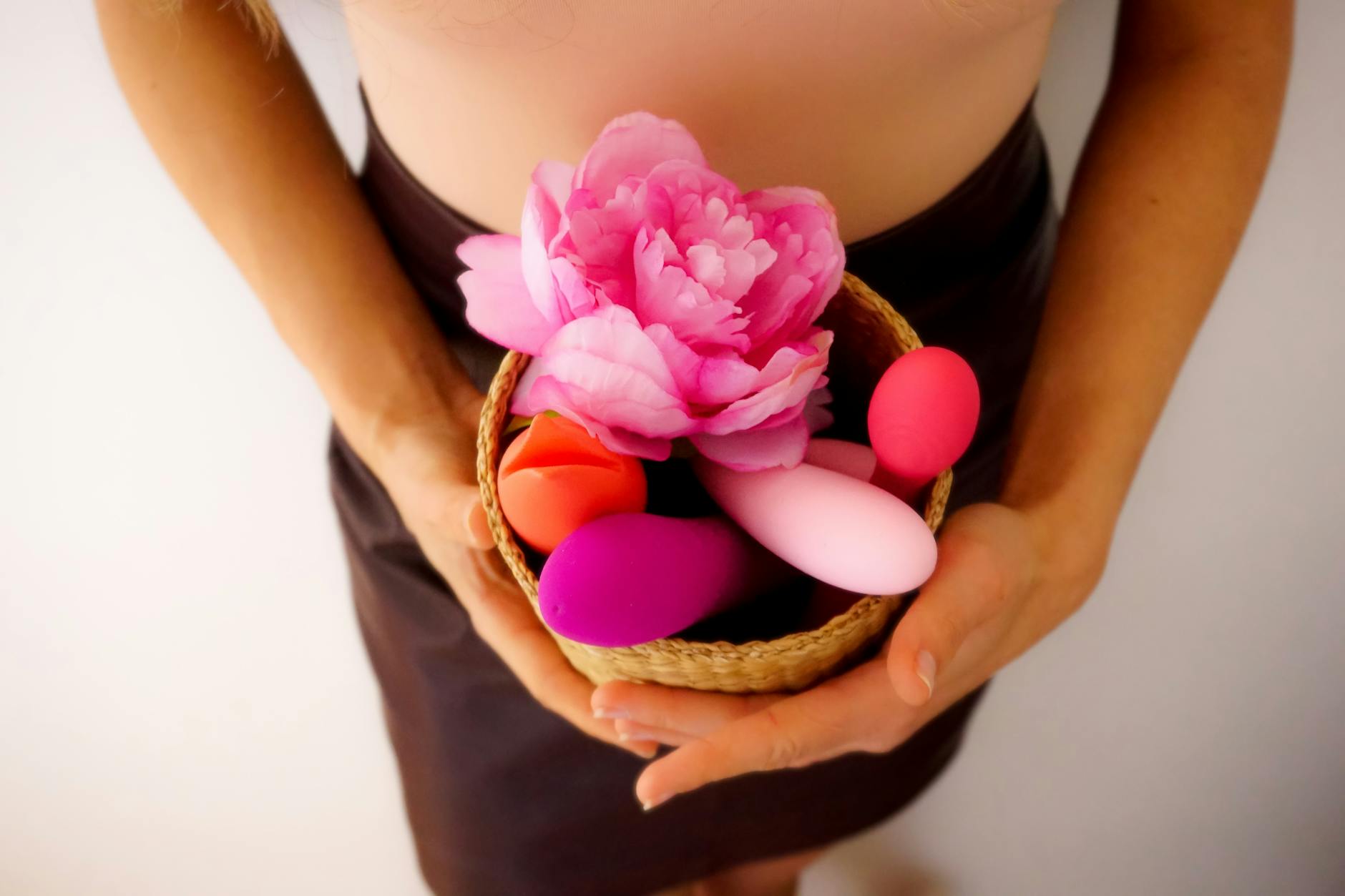
How to Use a Lemon Vibrator During Your Ovulation Window When Arousal Peaks
Your body has a pleasure peak built into your cycle. Most people don't know it's there.
Roughly 12-16 days before your period starts, estrogen and testosterone both spike. Clitoral tissue swells with blood. Nerve sensitivity sharpens. Orgasms become faster, stronger, and sometimes multiple. And here's the thing most cycle-syncing content won't tell you: this window is the exact moment a lemon clitoral vibrator becomes wildly more effective than any other time of the month.
This isn't woo. This is neurobiology. And it changes how you should approach pleasure during those specific days.
What your cycle actually does to arousal
Okay, the quick science: estrogen peaks during the follicular phase, about five to eight days before ovulation. Then luteinizing hormone (LH) spikes, triggering ovulation itself. That LH surge comes with a testosterone surge. Both together make your clitoris more responsive, more vascular, more ready.
Your vulva literally swells. The clitoral glans fills with blood. The vestibular bulbs (the spongy tissue on either side of the vaginal opening) engorge. This creates what feels like a lower threshold for arousal. You notice things you don't notice other weeks. Touch feels sharper. Vibration registers faster.
That's not placebo. That's physiology.
For people tracking their cycles, this is usually days 10-16 of a 28-day cycle, though cycles vary wildly. The easiest marker: check your cervical mucus. When it becomes stretchy and clear (like raw egg white), you're close to the LH surge. You're in the window.
Why lemon vibrators hit different during ovulation
Most vibrators work through direct pressure or broad vibration. A lemon vibrator uses air-suction technology, which stimulates the tissue differently. Instead of friction, it creates gentle pulses of pressure that draw the clitoral tissue into the device.
During ovulation, when your clitoris is already congested with blood and extra sensitive, suction feels more nuanced than a traditional vibrator. The sustained suction plus the pulsing rhythms create sensation that feels less like stimulation and more like a conversation between your body and the device.
During low-hormone days of your cycle, that sensitivity gap is smaller. The suction still works, but you might need more intensity or longer warm-up. During ovulation? Many people find they need less of both.
The three-day sweet spot
You don't have 12 days of peak arousal. You have three standout days.
Day one of the LH surge itself (ovulation day) usually brings the biggest testosterone spike. This is often day 14 of a standard cycle, but again, track your own patterns. On this day, you might notice you're already aroused before you even touch yourself. Lubrication comes easily. Your mind is faster to engage.
The two days immediately after ovulation still carry elevated hormones. Sensation remains sharp, though it begins to dip slightly as progesterone starts to climb.
Those three days are your peak window for using a lemon clitoral vibrator at lower intensities and still reaching orgasm quickly. Some people report their most intense orgasms happen on ovulation day itself.
How to set yourself up during this window
Timing matters, but so does environment and expectation.
Start with intention. Don't use your ovulation window to "try harder." Use it to notice. You're working with amplified sensation, not against resistance. Your job is to show up and let the hormones do their job.
Begin with less. If you normally start at intensity level 3 or 4 on your lemon vibrator, begin at level 1 or 2 during ovulation. The tissue is already primed. You don't need to wake it up. You need to guide it.
Warm up differently. During ovulation, skip the long foreplay if that's not your style. Your body is already partially aroused due to hormones alone. You can go straight to genital stimulation faster than you would mid-cycle. If you prefer extended warm-up, lean into it with your hands first. Spend time touching, noticing how reactive the tissue feels.
Use less lubricant (or none). This feels counterintuitive, but during ovulation, your body produces more natural lubrication. Adding water-based lube might feel like too much. Try starting without it. If you need it, add it then. During the luteal phase, you'll likely need it sooner.
Stay with lower patterns. The pulsing modes on the Lem (patterns 1-3) often feel more satisfying during ovulation than the constant-vibration modes. The pattern gives your nervous system something to follow without overwhelming it.
What happens if you ignore your cycle
You'll still get pleasure. Using a lemon vibrator works any day of the month. But ignoring your cycle means you're fighting biology instead of dancing with it.
Mid-cycle users often report surprise at how much faster things happen during ovulation. They think the device is "working better" when really their body has shifted. Then they get frustrated on other days when the same settings feel dull. They jack up the intensity. They desensitize. They think something's wrong.
None of that is necessary.
When you sync your approach to your cycle, you learn what pleasure actually feels like at each phase. You stop comparing day 20 to day 14 and expecting them to be the same. You stop chasing sensation you can only access during certain days. You work with your body instead of against it.
The emotional side of peak arousal
This matters as much as the physical part.
During ovulation, many people report clearer mental space around desire. Anxiety quiets. Distraction softens. You want sex more openly. You're less likely to negotiate yourself out of it.
If you have a partner, this is worth communicating about. "I'm going to feel more into this around day 14 of my cycle" is just information. It's not a request. It's not something they need to do anything about. But they might notice you initiating more, or being more present when you do have sex. That's real data.
If you're solo, use this information to protect your own time. You don't need a reason to set aside 20 minutes for yourself. But knowing your arousal genuinely spikes during ovulation can help you stop waiting for the "right mood" and just show up for the window when mood is built in.
The luteal phase contrast
After ovulation, progesterone rises. Estrogen fluctuates. Your clitoris gradually becomes less sensitive. Lubrication decreases. Arousal takes longer to build.
This is the time to recalibrate. Higher intensity settings on your lemon vibrator. Longer warm-up. More lubricant. Patience with yourself.
Understanding this contrast is what stops people from thinking "my body broke" when sensation drops post-ovulation. It didn't. Your hormones shifted. That's the whole cycle.
FAQ: Using Lemon Vibrators Across Your Cycle
Can I use a lemon clitoral vibrator every day, even during low-hormone phases?
Yes, absolutely. A lemon vibrator works any day of your cycle. The ovulation window isn't the only time pleasure is available. It's just when sensation naturally amplifies. During your luteal phase or follicular phase, you'll likely need higher intensity or longer warm-up, but that doesn't mean you shouldn't use it. The key is adjusting your approach rather than expecting the same response every day.
How do I track my ovulation if my cycle is irregular?
Cervical mucus is the most reliable marker (it becomes stretchy and clear around ovulation). Basal body temperature rises slightly after ovulation, but that only tells you ovulation happened, not that it's about to. Ovulation predictor kits detect the LH surge 24-48 hours before ovulation, which is useful if you want precision. Apps are helpful for patterns, but they're estimates. Pay attention to your body's signals: increased arousal, breast tenderness, and pelvic sensations often come with the surge.
Does this work if I'm on hormonal birth control?
No, not in the same way. Hormonal birth control (pills, patches, rings, shots) prevents the natural hormone surge that creates the ovulation window. You won't experience the same arousal peak. However, if you're on a progestin-only method (like the mini-pill or copper IUD), you might still ovulate and experience some of the cycle. Talk to your provider about your specific method. If you want to explore cycle syncing, understanding how your contraception affects your hormones is the first step.
What if my arousal peaks at a different time than "typical" ovulation?
Every body is different. Some people have their arousal surge earlier in the follicular phase. Others feel it more during the luteal phase (less common, but real). The point isn't to fit into a template. It's to notice your own pattern. Track arousal alongside cycle markers for 2-3 months. You'll see where your personal peak lives. Use that.
Can using a lemon vibrator during ovulation help me get pregnant?
Orgasms during ovulation don't improve fertility odds, though some research suggests orgasm might create a slight uterine contraction that could theoretically help sperm travel (it's a maybe, not a guarantee). But if conception is your goal, pleasure isn't a fertility hack. It's just pleasure. Use your arousal window for what feels good, not as a fertility strategy.
Is there a way to trigger arousal on non-ovulation days to match my ovulation response?
Not really. You can create the conditions for arousal (calm space, more foreplay time, better lube), but you can't manufacture the hormonal surge without the hormones. Some people use longer warm-up, partner involvement, or mental focus to deepen arousal on low-hormone days. That's valuable. But it won't feel identical to ovulation. And that's fine. Work with what you have each phase.
One last thing
Cycle syncing isn't about being "in tune with nature" or any spiritual stuff. It's about recognizing that your body has a rhythm and that rhythm changes how sensation works. A lemon clitoral vibrator works better during ovulation because your tissue is literally more responsive. That's not mysticism. That's biology.
When you sync your pleasure practices to your cycle, you stop forcing the same approach every day. You learn what arousal actually feels like at each phase. You stop comparing yourself to an impossible standard. And you get faster, stronger, more satisfying orgasms during the days when your body is already set up to deliver them.
That's the whole point. Not to add complexity to pleasure. To simplify it by working with what's already there.
If you're curious about how your body responds across your cycle, or if you want to explore using a lemon clitoral vibrator at different phases, we're here to help. Reach out anytime.
References
Britton, Z., et al. (2014). "Orgasm prevalence and fluctuation in an online sample of women aged 18-94." Journal of Sex & Marital Therapy, 40(4), 322-337.
Diamanti-Kandarakis, E., et al. (2012). "Endocrine-disrupting chemicals: An Endocrine Society scientific statement." Endocrine Reviews, 30(4), 293-342.
Priebe, G., & Svedin, C. G. (2013). "Operationalization of child sexual abuse in research: Review of definitions and their implications." Child Abuse & Neglect, 37(12), 1155-1167.
Tenhouse, B. (2013). "The female sexual response cycle." Journal of Obstetric, Gynecologic & Neonatal Nursing, 22(5), 482-492.