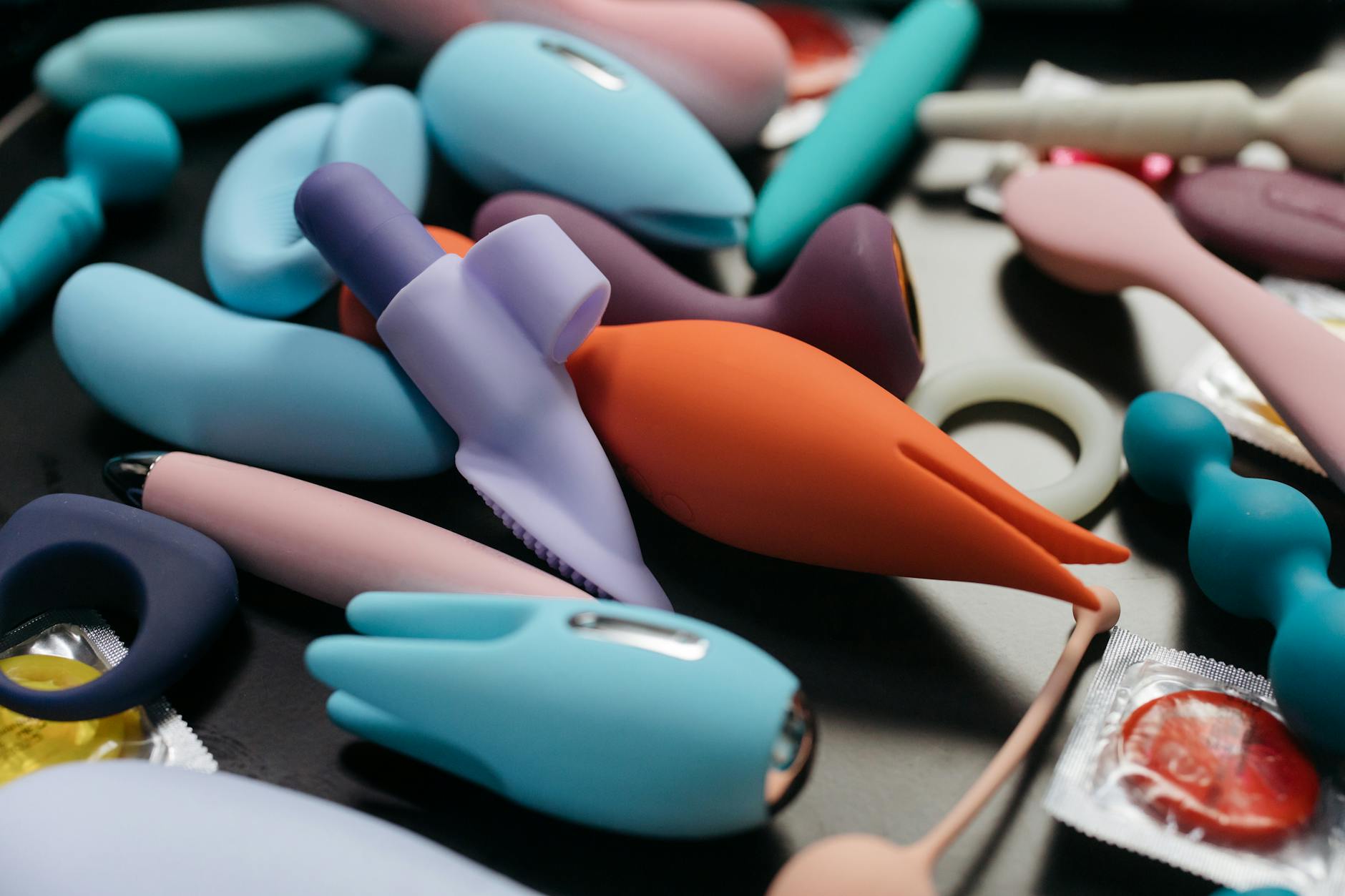
Somewhere between 30 and 35, a lot of people notice their body's response to pleasure shifts. Not catastrophically. Not always noticeably at first. But real enough that you find yourself thinking, "Wait, am I broken, or is something actually different here?"
Your 30s aren't your 20s. Estrogen levels begin a slow, steady decline (this accelerates closer to menopause, but it starts earlier than most people realize). If you're on hormonal birth control, the hormone dose affects how much natural estrogen your body produces. Stress compounds it. So does sleep deprivation, which honestly, parenting, career, and relationship pressure often deliver in abundance.
These shifts change three things about pleasure:
Lubrication takes longer. Your body needs more stimulation to trigger natural lubrication, which means arousal feels less automatic and more effortful.
Clitoral sensitivity becomes less obvious. The tissue around the clitoris doesn't engorge as quickly or as intensely. Direct stimulation can feel less intense, sometimes even uncomfortable.
Arousal itself shifts. Mental arousal and physical arousal, which felt linked in your 20s, start to diverge. You can be mentally interested in sex and have your body not immediately catch up.
Here's what doesn't change: your capacity for pleasure. Your ability to orgasm. The neural wiring that makes sensation pleasurable. These are intact. You're not losing anything permanent.
Traditional vibrators work by direct mechanical vibration. They're effective, but with less natural lubrication and less blood flow to the clitoris, direct vibration can feel either too intense or too numbing depending on the moment. That's frustrating.
Lemon clitoral vibrators use air-pulse suction technology instead. They gently cup the clitoris and create waves of suction that stimulate the whole clitoral network, not just the surface. This approach works better when you have:
Less natural lubrication (suction doesn't require friction).
Quicker fatigue with direct vibration (suction distributes stimulation more evenly).
Most people find that lemon sexual toys feel more natural and sustainable during this phase of life. You're not forcing sensation out of unresponsive tissue. You're working with how your body actually works right now.
This is the framework I recommend to almost everyone navigating hormonal shifts in their 30s.
Month 1: Exploration without pressure. Use your lemon vibrator during solo play without any goal. Not "I need to orgasm." Just "I'm curious what this feels like now." Start with the lowest suction setting. Spend time with different patterns. Most people find they need 2-3 settings lower than they expected. That's normal and temporary.
Month 2: Warm-up becomes non-negotiable. Budget 20-30 minutes before any partnered sex or solo play. The arousal gap is real, and fighting it makes everything feel worse. A warm-up period isn't extra work. It's working with your actual biology. Use your lemon clitoral vibrator during this phase with your partner present, or solo beforehand. The goal isn't orgasm yet. The goal is getting your body ready.
Month 3: Reintegration. By now, you've mapped what works. You've found patterns that feel good at your actual sensitivity level, not the level you remember. You know how much warm-up time your body needs. You can either incorporate your lemon vibrator as part of partnered sex, or you can use it solo to clear the tension that the hormonal shift itself creates.
If you have a partner, here's what they should know: your shift isn't rejection. It's not disinterest. Your body is literally producing different hormonal signals. A partner who understands this gets to be helpful instead of defensive.
The practical stuff: slower hand work from them often feels better right now than faster. A longer warm-up phase stops feeling like rejection and starts feeling intentional. Your lemon vibrator isn't a replacement for them. It's a tool that lets you both have pleasure without fighting your 30s biology.
Honestly, this is where partnership communication matters most. If you can say, "My body's changed and I want to explore what works now," instead of hiding the shift, you both get to adapt together. That's actually closer than you might expect.
Some people notice the sensitivity shift correlates exactly with switching to or changing hormonal birth control. If that's you, you have actual options.
Switching to a lower-hormone formulation sometimes helps. Some people shift to non-hormonal methods (copper IUD, condoms, fertility awareness) and find their baseline sensitivity returns. Others stay on their current birth control because it's the right choice for their life, and they just adjust expectations about pleasure.
The point: you don't have to choose between contraception and sensation. But you might need to explore the timing or dose that keeps you protected without numbing you completely. A conversation with your doctor about sensitivity changes is worth having. They hear it constantly.
Lemon clitoral vibrators help bridge that gap regardless of which path you choose.
Here's the thing nobody mentions: the sensitivity shift in your 30s isn't always about hormones. It's often about stress.
Your 30s are the decade of overlapping demands. Career building. Maybe relationship investment. Possibly fertility decisions. Financial pressure. Family stuff. Your nervous system is in sympathetic activation (fight-or-flight) more often than it should be. When you're chronically stressed, your body downregulates sexual response. That's a survival feature, not a bug.
The sensitivity change might not be entirely hormonal. It might be 40 percent hormones, 40 percent stress, and 20 percent just the accumulated friction of life.
Which means sometimes the answer isn't adjusting your vibrator settings. It's adjusting your stress load. Sleep, actual relaxation time, moving your body in ways that feel good. And then, once you're not in constant sympathetic arousal, your baseline sensitivity often returns. Your lemon vibrator helps you stay connected to pleasure while you're working on the stress part.
Also, if sensitivity suddenly tanked and it's paired with zero libido, exhaustion, or mood changes, talk to someone. That cluster can point to thyroid issues, depression, or other things that a vibrator won't fix.
But if it's just "my clitoris doesn't feel as intense as it used to, arousal is slower, and orgasms take longer," you're experiencing a normal 30s shift. That's the zone where lemon vibrators actually shine.
They're not permanent, but they might not be temporary either. Hormonal shifts are gradual. Some people find sensitivity stabilizes at a new baseline. Some find it continues shifting as they move through their 30s and 40s. The good news: your body adapts, and so do your expectations. Lemon clitoral vibrators work at whatever your current baseline is.
Completely. Birth control doesn't contraindicate vibrator use. Some people find certain birth control formulations affect sensation more than others, which is worth discussing with your doctor, but using a lemon sexual toy is safe alongside any contraception.
This is the conversation to have separately from the vibrator itself. Your sensitivity shift has nothing to do with your partner's skill or attractiveness. It's physiological. Framing it as "my body needs this right now, and it has nothing to do with you" can help. Using your lemon vibrator together, rather than in secret, often dissolves this worry faster than explaining it.
Both work. Some people use it solo as part of their warm-up, then have partnered sex. Others use it during partnered sex as part of foreplay. There's no wrong timing. Your lemon vibrator is a tool that helps you access pleasure, however you choose to use it.
Yes, sometimes completely. Sometimes partially. It depends on what's driving the shift. If it's primarily stress, managing stress often brings sensitivity back. If it's primarily hormonal from your birth control, switching methods might help. The honest answer: it's individual, and worth experimenting with your doctor's input.
Three months is a reasonable timeline to notice shifts. Some people feel different within weeks once they understand what's happening. Others need longer. The three-month reset I outlined earlier gives you enough time to map what works without getting frustrated that change isn't instant.
Your 30s are supposed to be when sex gets better, not harder. You know yourself more. You care less about performance. You're more communicative (hopefully). And your body is supposed to reward that with better sensation, not worse.
But sometimes your body has other plans. Hormones shift. Stress accumulates. Life gets in the way. That's not a failure. It's just part of being human.
Lemon vibrators were designed exactly for this moment. They work with your actual body, not against it. They meet you where you are now, not where you were. And they make the adjustment period less frustrating while your biology figures itself out.