Here's what nobody tells you about partner pressure
Arousal dies fast when someone else's need is louder than your own desire. That's not weakness. It's a perfectly normal neurological response. Your body's threat detection system kicks in, flooding your system with cortisol, and suddenly the thing you came to the bedroom to feel feels impossible.
Partner pressure shows up in subtle ways. It's not always "hurry up." It's the sigh when you need warm-up time. It's the hopeful text that makes your stomach tighten instead of flutter. It's the way they watch your face during sex, waiting for proof that you're enjoying it. And suddenly you're performing pleasure instead of feeling it.
The good news: this is reversible. And a tool like a lemon vibrator can be the key to separating your pleasure from their expectations, then rebuilding it together.
Why partner pressure tanks arousal in the first place
When someone you care about wants sex, there's an automatic shift. You start monitoring their satisfaction instead of your own. You're checking if they're enjoying it, if they seem fulfilled, if they'll feel rejected if you ask for what you need. That hypervigilance is exhausting, and arousal can't coexist with that level of vigilance.
My clients describe it like this: "I'm in my head the entire time, watching the movie instead of being in it."
The brain has limited bandwidth. If 60 percent of your attention is allocated to your partner's needs, only 40 percent is available for sensation, pleasure, and your own body. Over weeks and months, that teaches your body that arousal isn't safe. Your nervous system learns to dampen it before it even starts.
This is also deeply gendered. People with vulvas are socialized to prioritize partner satisfaction from their first sexual experience onward. The cultural message is clear: good sex is when your partner feels good. Your arousal is secondary. So when a partner adds actual pressure on top of that already-baked-in pattern, many people simply shut down.
How lemon vibrators interrupt the pressure cycle
A lemon vibrator is a tool that works in two directions: first, it helps you access arousal on your own terms, without an audience or an expectation. Second, it gives you and your partner a reset point for how sex happens together.
When you use a lemon clitoral vibrator alone, you're rebuilding the neural pathway between sensation and pleasure without the pressure reflex. You're teaching your body that arousal can happen without monitoring someone else's reaction. For many people, this is revelatory. Pleasure tastes different when it's not tangled up with someone else's need.
A Lemon vibrator's suction design also works well for people in this exact situation. It delivers consistent, reliable stimulation without requiring you to do mental work. You can turn it on, feel what happens, and adjust. That simplicity removes another layer of performance pressure. You're not thinking about technique or rhythm. You're just receiving sensation.
Building solo arousal back first
If partner pressure has killed your arousal, the first step isn't couples sex. It's learning what pleasure feels like when nobody else is involved.
Set a real boundary with yourself: this time is just for you. Not for later, not for your relationship, not to "fix" anything. Just for the experience of feeling pleasure without an audience.
Start with your lemon vibrator, ideally on one of the lower settings. Many people who've been in pressure-heavy dynamics are startled by how quiet and internal pleasure can feel when they're the only audience. There's no requirement to be loud, to come quickly, to perform recovery. Just sensation.
Take your time. If it takes 20 minutes to feel anything, that's information, not failure. Your body is just being cautious. That's adaptive. It protected you. Now you're teaching it that it's safe to feel again.
Keep a few things in mind as you rebuild solo arousal. Don't set a goal of orgasm. That's another form of performance pressure, just directed at yourself. Instead, aim for curiosity. "What does this feel like? Where do I want more sensation? When do I want to pause?" Those questions aren't goal-oriented. They're exploratory.
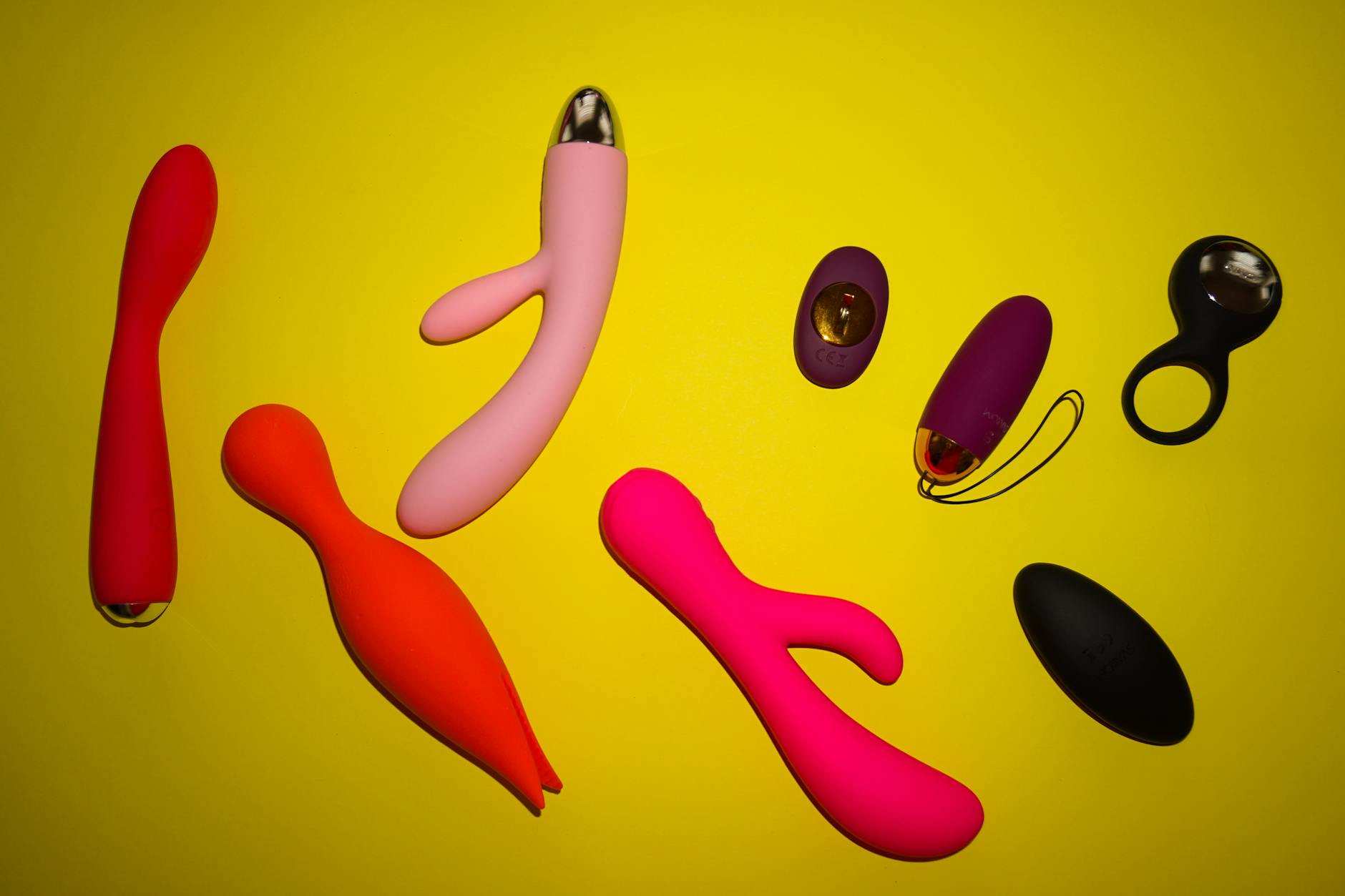
Photo by FounderTips on Pexels
When you're ready to bring your partner back in
Once you've spent time rebuilding arousal solo, the dynamic shifts. You're no longer approaching sex from a place of depletion and obligation. You've remembered what your own pleasure feels like. That's a different foundation.
Now comes the conversation. This is where I see couples get stuck. Many people never actually tell their partner that pressure has been killing arousal. They hope the partner figures it out. That's usually a very long wait.
Here's a frame that works: "I need us to reset how we approach sex. When I feel like I need to perform, I can't feel arousal. That's on me to work on, and I have been. But I also need you to know that checking in, or timing, or the way you look at me is sometimes more pressure than help." That's not an accusation. That's information.
Most partners respond well to this when it's framed around what helps, not what's wrong. Instead of "you put too much pressure on me," try "I need more space and less checking in. I need you to trust that I'm present even if I'm quiet."
Then, when you bring your lemon vibrator into partnered sex, it's not a tool that proves anything. It's just part of the landscape. You might use it while your partner is inside you. You might use it before. You might use it as foreplay. The structure matters less than the fact that you're both clear: this is something you need to feel pleasure, and that's fine.
The practical setup that actually works
If you're introducing a lemon clitoral vibrator into partnered sex after a pressure-heavy phase, a few logistics matter.
First, acknowledge it out loud. "I want to use this because it helps me feel more." That one sentence removes so much shame and speculation. No one's sitting there wondering what it means about them. You just said it means something about your arousal.
Second, choose positions that work physically. If your partner is penetrating you, having access to your clitoris with a vibrator means positioning matters. Angles that worked before might need tweaking. This is a practical conversation, not a romantic one. "Can we try this angle?" is enough.
Third, set a tempo expectation. If you're using a lemon vibrator, let your partner know whether you want them to move, pause, or meet a rhythm. Some people want their partner to stay still while they control the whole experience with the vibrator. Others want rhythm and vibration working together. Talk about it first.
The goal is for sex to feel collaborative, not like one person is servicing another. A lemon vibrator can actually create that balance because it distributes the pleasure-seeking responsibility. You're not relying on your partner's touch alone. You're using a tool that lets you feel exactly what you need.
Long-term: when pressure is a pattern, not a moment
Sometimes partner pressure is situational. Sometimes it's the actual architecture of the relationship. There's a difference.
If you notice that your partner consistently can't handle your needs being prioritized, or that the pressure escalates when you set boundaries, that's worth taking seriously. A lemon vibrator can't fix a relationship where your pleasure is genuinely secondary. It can support pleasure in a healthy dynamic. It can't create one.
This is when couples therapy becomes useful. Not because anything is broken, but because the pattern of pressure has been going on long enough that it needs outside help to shift.
For now, though, try this: reconnect with your own arousal first. Let a lemon vibrator help you remember what pleasure feels like. Then bring that reclaimed sense of your own desire back into the relationship.
Your arousal is not a performance. It's not a gift you give your partner. It's a signal from your own body about what feels good. When you're clear about that, partner pressure loses its power.
FAQ: Partner pressure and arousal
How do I tell my partner that their pressure is killing my arousal without hurting them?
Frame it around your experience, not their behavior. "When I feel like you're waiting for me to be aroused, I can't relax enough to get there" is different from "you put too much pressure on me." The first is about your nervous system. The second sounds like blame. Most partners can work with the first version.
Can using a lemon vibrator alone actually fix arousal issues caused by a partner?
It can reset your nervous system and help you remember what pleasure feels like in isolation. That's valuable and necessary. But if your partner is still creating pressure, returning to partnered sex without addressing that pattern will likely recreate the shutdown. The vibrator is a tool. The conversation is the actual fix.
What if my partner gets jealous about me using a lemon vibrator alone?
That jealousy usually points to something else: fear of inadequacy, or control patterns. A quick reassurance rarely fixes it. Instead, get curious. "What are you worried about?" Listen. Sometimes it's just education. Sometimes it's bigger. But glossing over it for the sake of peace usually makes it worse.
Should I use a lemon vibrator with my partner to avoid the pressure problem?
Not as a preventative. That suggests the vibrator is there to compensate for something missing in your partner's touch, which can create a different kind of pressure. Use it because it feels good and because your body needs it. That's enough.
How long does it take to rebuild arousal after months of partner pressure?
Varies wildly. Some people notice a shift in weeks. Others take months. Your nervous system will move at its own pace. The key is consistency and removing the pressure even from yourself. "I should be further along by now" is another form of pressure.
Is it normal to orgasm more easily with a vibrator than with a partner after experiencing arousal pressure?
Completely normal. The vibrator doesn't come with relationship history. It doesn't have needs. It delivers exactly the same sensation every time. Your nervous system relaxes around that predictability. Over time, as the pressure pattern with your partner shifts, the gap often closes. But if it doesn't, that's information too.
The reset button exists
Arousal killed by partner pressure can be rebuilt. It takes time, honesty, and usually some solo time with your own pleasure first. A lemon vibrator can be part of that reclamation. But the real work is the conversation. Once you're both clear on what's actually happening, the pathway forward is usually much simpler than it seemed when you were drowning in the pressure.
If you're ready to start that conversation or you want to explore more about how to rebuild intimacy in a pressured dynamic, I'm here to help. Reach out at /contact and let's talk about what your particular situation needs.