The thing nobody wants to admit
Desire mismatch is the most common sexual complaint I hear in my therapy room. Not erectile dysfunction. Not difficulty orgasming. Mismatched libido. One partner wants sex twice a week. The other wants it twice a month. Neither is wrong. Both are frustrated.
Here's what happens next: resentment. The higher-desire partner feels rejected. The lower-desire partner feels pressured and guilty. Sex stops feeling like connection and starts feeling like an obligation or a weapon. The bedroom becomes a battleground.
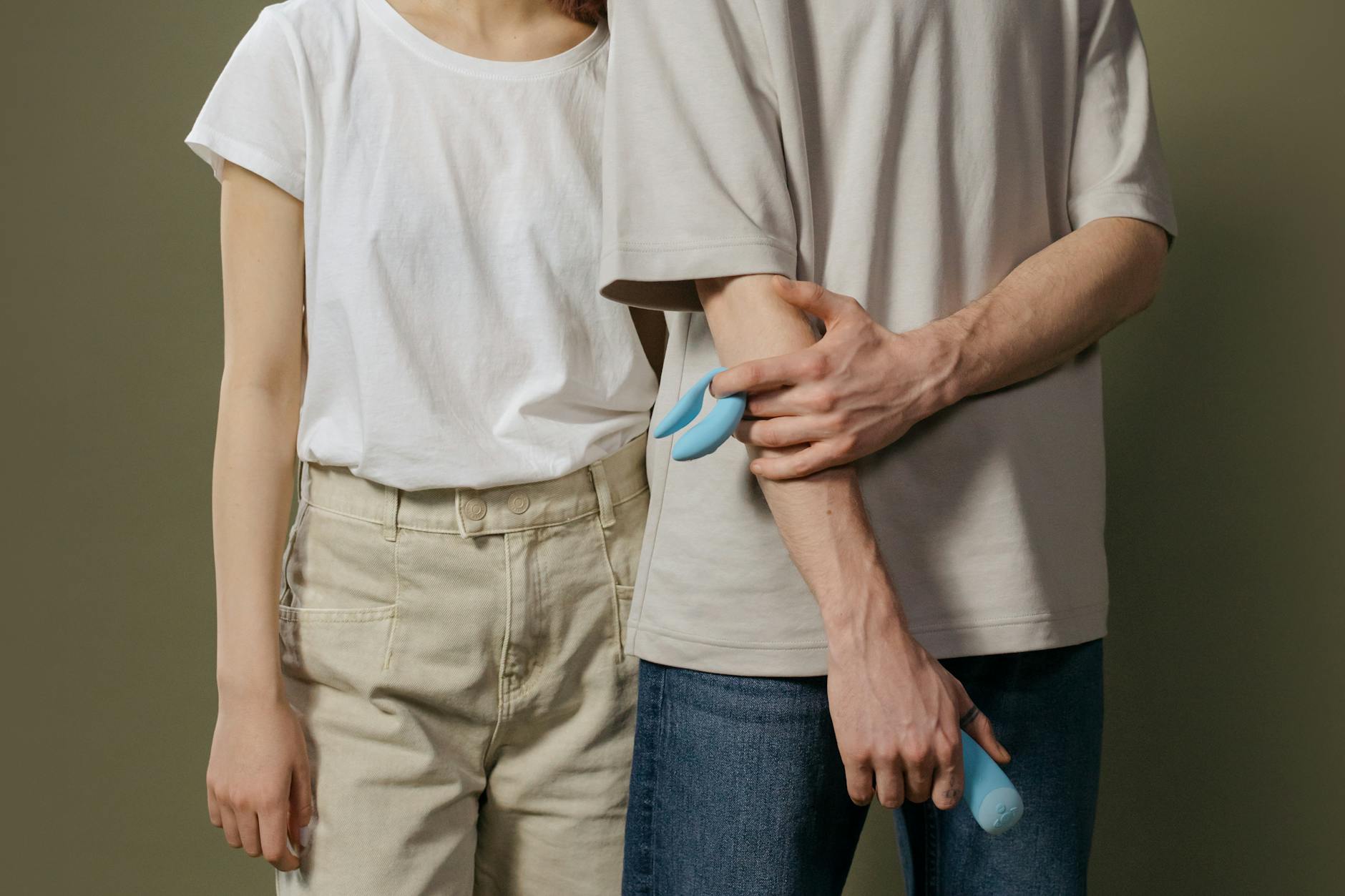
A lemon vibrator won't solve a relationship problem, but it can crack open a conversation that's been stuck.
Why desire mismatch gets worse, not better, on its own
When one partner stops initiating sex, it's usually not because they've stopped caring. It's because initiating feels like setting themselves up for rejection. After enough "not right now" moments, most people stop asking. The lower-desire partner feels relieved. The higher-desire partner feels invisible.
Meanwhile, the lower-desire partner often doesn't realize the damage. They think, "We still have sex. It's fine." But the higher-desire partner is keeping score. They're hurt. They're wondering if they're still attractive, still wanted.
That gap between what you think is happening and what your partner is actually feeling is where couples get stuck for years.
A lemon vibrator offers a way to interrupt that pattern. Not by forcing more sex, but by reframing what sex can be.
The permission slip you both need
Here's the insight that changes everything: when desire is mismatched, the lower-desire partner often says yes to sex they don't want, and the higher-desire partner takes what they can get. Both end up feeling resentful.
What if you could build a version of intimacy where the lower-desire partner isn't saying yes to something they're not ready for, and the higher-desire partner isn't settling for a resentful encounter?
A lemon vibrator can be that bridge. Not as a replacement for partnered sex, but as a space where pleasure gets to be selfish, uncomplicated, and entirely on the lower-desire partner's terms.
Here's what I mean practically.
How this actually works (the three-step frame)
Step 1: Separate pleasure from obligation.
Instead of "we need to have sex more often," the conversation becomes "I want you to have more pleasure." Those sound similar, but they're not. One is a demand. The other is a gift.
When the lower-desire partner knows they can explore pleasure solo with a lemon clitoral vibrator, without their partner watching or waiting or hoping it leads somewhere, the pressure dissolves. Suddenly they have permission to feel aroused on their own timeline.
For the higher-desire partner, this is crucial: you're not in the room. You're not keeping time or waiting for it to be your turn. Your partner's pleasure exists independently of you, for a moment. That's healthy. That's also sexy as hell, because it means when you're together, they're not obligated. They actually want to be.
Step 2: Build actual desire, not duty.
When the lower-desire partner starts using a lemon vibrator regularly, something shifts. They remember what arousal feels like without the weight of meeting someone else's need. They build a sense of their own sexuality separate from their relationship.
That sounds counterintuitive. Won't that make them want their partner less? No. The opposite happens. When people reclaim their own pleasure, they become more interested in partnered sex because it's a choice, not an escape route from guilt.
The higher-desire partner, meanwhile, stops feeling resentful about solo pleasure because they understand the function it's serving. It's not a rejection of them. It's scaffolding for the relationship.
Step 3: Create a new template for intimacy.
Once both partners are comfortable with lemon vibrators in the relationship, you can experiment together. Not as a demand. As an option.
Some couples find that using a lemon vibrator during partnered sex changes the dynamic entirely. The lower-desire partner isn't worried about lasting long enough or whether penetration feels good. The higher-desire partner sees their partner genuinely aroused. Everyone's nervous system calms down.
Other couples find that solo time with a lemon clitoral vibrator creates more desire for their partner, because the pressure is off.
There's no right version. The point is that you're no longer stuck in the same exhausting loop.
The conversation you need to have first
If you're the higher-desire partner, you need to say this clearly: "I want you to experience pleasure. Not for me. For you. I want you to feel good about your sexuality, with or without me in the room."
Mean it. Your partner will know if you don't.
If you're the lower-desire partner, you need to say: "I want to figure this out together. I don't want to feel guilty about not wanting sex as often. And I don't want you to feel rejected. A lemon vibrator might help us both find a middle ground."
Then actually listen to what your partner says. Don't assume they're resentful. Ask.
The research is clear on this: couples who can talk about desire mismatch without shame or blame recover faster than couples who try to fix it in the bedroom. The bedroom is the last place to solve a relationship problem.
When to use a lemon vibrator together
Start small. You're not staging a performance. You're building comfort.
Option one: use it during foreplay, if that feels natural. The lower-desire partner uses a lemon vibrator on themselves while you're together. The higher-desire partner can touch them, kiss them, be present. The goal isn't to rush to penetration. The goal is for everyone to feel wanted.
Option two: take turns. One partner uses a lemon clitoral vibrator while the other watches. Just watches. No pressure to reciprocate in the moment. This is about desensitizing the shame around solo pleasure in front of your partner.
Option three: use it as foreplay for yourself before partnered sex. The lower-desire partner gets genuinely aroused first, alone or with their partner present, using a lemon vibrator. Then you move into whatever partnered sex looks like that day.
None of these are rules. They're just templates. Your version will look different.
What actually changes
When desire mismatch starts to unwind, couples usually notice three things.
First, sex stops feeling like a transaction. You're not negotiating frequency anymore. You're just... having sex when it makes sense for both of you.
Second, the lower-desire partner often wants sex more, because it no longer feels like obligation. Counterintuitive, but true.
Third, the higher-desire partner relaxes. They stop feeling rejected because they understand that their partner's solo pleasure isn't a rejection of them. It's actually rebuilding the foundation of mutual attraction.
None of this happens overnight. You're not using a lemon vibrator to fix your relationship. You're using it as a tool to have a different conversation.
When you might need more support
If desire mismatch is connected to deeper issues like infidelity, chronic criticism, or contempt in the relationship, a vibrator isn't going to help. You need a couples therapist.
If the lower-desire partner has a history of sexual trauma or shame, a lemon vibrator can help, but you'll want professional support alongside it. This isn't something to navigate alone.
If one partner is using a vibrator to avoid partnered sex altogether, that's worth examining. Avoidance isn't the same as preference. There's a difference between "I want solo pleasure" and "I don't want you."
The tool only works if both partners are willing to see it as something that strengthens the relationship, not something that threatens it.
The thing to remember
Desire mismatch is one of the hardest relationship issues to navigate because it touches something deep. It feels personal. It feels like a referendum on whether your partner still wants you.
But it's usually not. It's usually biology, stress, medication, or just different set points for arousal.
A lemon vibrator can't change someone's desire set point. But it can create space for both partners to explore pleasure without the weight of obligation. It can rebuild the association between sex and something pleasurable, rather than something stressful.
When desire is rebuilding, that's when real intimacy returns.
People also ask
Will using a lemon vibrator make my partner less interested in sex with me?
Not if you frame it correctly. Solo pleasure isn't a rejection of partnered sex. It's actually the opposite. When the lower-desire partner removes the pressure to perform, they often become more interested in partnered sex because it's genuinely wanted rather than obligatory. The key is that both partners see the vibrator as something that strengthens the relationship, not something that threatens it.
How do I bring up using a lemon vibrator if my partner thinks I'm rejecting them?
Start with reassurance. Say something like, "I want to experience more pleasure for myself, and I also want us to feel closer." Then listen to their concerns without getting defensive. They might be worried it means you don't want them anymore. You need to hear that and address it directly.
What if my partner wants to watch me use a lemon vibrator and I'm uncomfortable?
That's completely valid. Boundaries around solo pleasure are real and important. You can say, "I need time alone with this," or "I'm not ready for that yet." Your partner's curiosity doesn't override your comfort. If you eventually feel comfortable sharing that experience, great. If not, that's fine too.
Can a lemon clitoral vibrator help if one partner has erectile dysfunction?
Yes, often. When penetration becomes unreliable, a lemon vibrator can shift the focus to what does work. It removes the pressure from the higher-desire partner to perform in a specific way, and it gives the lower-desire partner something that feels consistent. That relieves a lot of anxiety for both people.
How often should we use a lemon vibrator together if we have mismatched desire?
There's no right answer. Some couples use it weekly. Some use it once a month. Some use it solo and never together. The frequency should feel good to both of you. If one partner feels pressured to use it, it stops being helpful.
What if a lemon vibrator helps but desire mismatch still feels unresolved?
It might be time to see a therapist together. A vibrator is a tool for rebuilding comfort with pleasure and communication. But if the mismatch is rooted in resentment, contempt, or deeper relationship issues, you need professional support to address those roots. The vibrator is part of the solution, not the whole solution.
The path forward
Desire mismatch doesn't mean your relationship is broken. It means you're two people with different biology, different stress levels, and different arousal set points. That's normal.
But pretending the difference doesn't exist, or trying to strong-arm your partner into wanting sex more often, doesn't work. What works is choosing to rebuild pleasure together. Sometimes that means solo. Sometimes that means together. A lemon vibrator gives you tools to do both.
Start with a conversation. Then see what opens up.