
The intensity mismatch nobody wants to discuss
Here's the thing about pleasure preferences. You can have everything else aligned.with your partner. Same values, same sense of humor, same vision for the future. And then you discover that what feels transcendent to one of you feels uncomfortable to the other, and suddenly you're both frustrated for completely different reasons.
One partner wants soft, building stimulation. The other wants intensity right away. One needs time to warm up to stronger sensations. The other finds low settings boring. You're not broken. Neither is your partner. You just have different neurology, different erogenous sensitivity, different arousal patterns. It's actually wildly common.
Why intensity preferences diverge
Your nervous system's sensitivity to stimulation isn't a choice. Some people naturally have more nerve density in their clitoris. Others have a higher activation threshold. Some respond more vividly to variable patterns, while others want consistent, deep pressure. None of these variations is wrong or better.
Add hormonal shifts, stress, fatigue, medication, or past sexual experience into the mix, and intensity preferences can shift month to month. You're not changing your mind arbitrarily. Your body is responding to real physiological changes. The problem comes when one partner adjusts the intensity to suit themselves, and the other person is either overwhelmed or undersatisfied before you even get started.
Why traditional toys make this harder
Most vibrators give you one setting or a handful of preset patterns. You're both using the same toy at the same intensity, which means someone's always compromising. You either turn it down for the person who prefers gentler touch, which means the other person isn't getting enough stimulation to build toward orgasm. Or you ramp it up, and suddenly the partner who needs softness is being overstimulated in ways that pull them out of pleasure entirely.
Clitoral vibrators like the Lem change this equation because they offer something different. Air-suction technology lets you control intensity and pattern separately in ways that traditional vibration can't. You can start at pattern one, barely-there sensation, and build gradually. You can also jump to patterns that deliver more intense stimulation without feeling jarring. The key is that both of you can tune your own experience independently if you're alternating, or you can find a middle ground that actually works for both bodies in the room.
The conversation that needs to happen first
Before you bring any toy into this, name the thing. Sit down outside the bedroom and actually say: "My ideal intensity feels different than yours, and I don't want either of us to settle."
You're not criticizing their body or their preferences. You're identifying a real incompatibility and looking for a solution together. That's the opposite of blame. That's partnership.
Ask each other specific questions. What does "too soft" feel like for you? What pushes you over into overstimulation? Do you prefer a slow build or fast intensity? Do certain patterns feel better than others? Is intensity preference consistent or does it shift based on arousal level, stress, time in your cycle, or fatigue?
The more data you gather, the clearer your solution becomes.
How clitoral suction technology actually solves this
The Lem and other lemon clitoral vibrators work through gentle suction and wave patterns rather than straight vibration. This matters because it gives you more granular control.
If one partner needs gentler stimulation, you can use the lowest settings, which still create noticeable sensation without the intensity that makes their nerve endings feel blitzed. The suction itself creates a different kind of stimulation than vibration. Many people find it feels more responsive, more alive, less like endurance testing.
For the partner who wants stronger sensation, you're not stuck with "medium" or "high." You can layer different things. You can move the toy to slightly different positions on the clitoris, changing how the suction feels. You can combine it with other touch. You can use a pattern that builds in intensity rather than a flat-out strong setting.
Using this with a partner step by step
Start with individual exploration. Before you use it together, spend time alone with a clitoral vibrator and get to know how your body actually responds to different settings. This removes performance pressure. You're not worried about timing or what your partner thinks. You're just gathering honest data about what you like. This is genuinely useful information that makes partnered sex better later.
Try it on the same body first. Have one partner use the toy on the other while the receiver just focuses on sensation. No pressure for arousal or orgasm. The giver learns what patterns and speeds their partner is responding to. The receiver gets to guide intensity in real time. "A bit softer here," or "Actually, I want to try pattern three." That information is gold.
Find your middle ground. You're looking for a setting that satisfies both of you for at least part of your sexual time together. It doesn't have to be your favorite intensity. It just has to be in a range where you can both build toward pleasure. This might be pattern two at medium intensity. It might be a combination of two different lemon vibrators so you each have one calibrated to your preference.
Use it as your bridge, not your entire plan. The toy isn't the whole experience. It's the tool that lets you get to the same level of arousal so that partnered sex feels good for both of you. Once you're there, you might keep using it, or you might transition to other kinds of touch. The point is you're starting from a place where you're both actually pleasured, not one person gritting through.
What this solves beyond just intensity
When one partner consistently has to adjust their pleasure downward to accommodate the other, resentment builds quietly. You're not angry about the intensity mismatch itself. You're angry because you feel like your pleasure doesn't matter as much. A tool that lets you both get what you actually need signals something deeper. It says your satisfaction counts equally.
This also removes the conversation from being about your partner's body ("You're too sensitive" or "You don't respond to anything") and puts it where it belongs: on finding a solution that works for both people. You're not trying to fix each other. You're collaborating on the logistics of shared pleasure.
When to adjust your approach
If you try a few sessions and one person is still not satisfied, it's probably not a toy problem. It might be that you need a different toy entirely. Some people really do respond better to traditional vibration than suction. Others find air-pulse technology transformative. The tool is only helpful if it actually matches your body's preferences.
It could also be that the mismatch is bigger than intensity settings. If one partner wants much longer foreplay and the other wants to move to penetration quickly, no vibrator solves that alone. You're managing two separate timing preferences, not just intensity. <a href="/blog/how-to-use-lemon-vibrators-when-foreplay-feels-rushed-or-incomplete">How to use lemon vibrators when foreplay feels rushed or incomplete</a> covers this more directly.
Or there's something emotional happening. If one partner consistently sets intensity very low or very high as a way of controlling the experience, that's not a pleasure preference. That's a relational issue that benefits from conversation or therapy, not just toy adjustments.
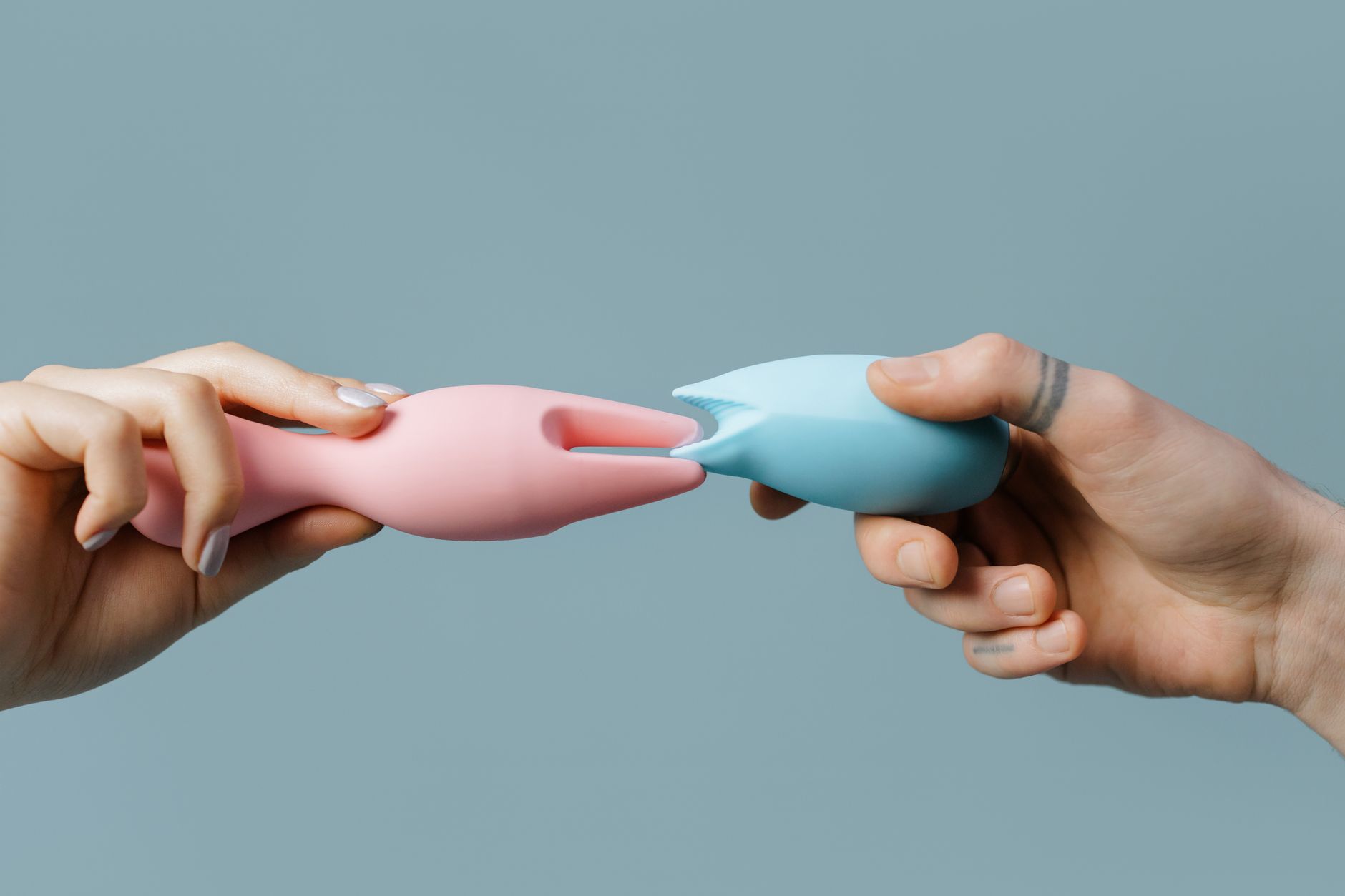
Photo by cottonbro studio on Pexels
Building on this foundation
Once you've cracked intensity alignment, you've actually solved something bigger. You've created a system where both people can communicate what they need and trust that it matters. You've turned a physical incompatibility into a logistical solution instead of a character flaw.
Most couples don't talk about intensity preferences because it feels exposing. Saying "I need it softer" can feel like admitting you're fragile. Saying "I need it stronger" can feel like your partner isn't enough. A clitoral vibrator like the Lem makes the conversation practical instead of emotional. You're not arguing about what your bodies should want. You're just adjusting a setting.
FAQ
Can we use the same lemon vibrator if we have different intensity preferences?
Yes, but you'll probably take turns rather than use it simultaneously. One person adjusts it to their optimal setting, uses it, then the other person either resets it or uses a different pattern. If you both want to use it at the same time during partnered sex, you'd ideally have two toys. Many couples keep a lemon clitoral vibrator that one partner prefers and maybe another toy for the other person.
What if my partner thinks asking for a different intensity means they're not enough?
This is the real issue underneath most of these conversations. Reassure your partner that intensity preference is about your nervous system, not about them. It has nothing to do with attraction or desire. You want them, and you also want your body to feel good in a specific way. Both things are true. If your partner is still defensive, couple's therapy can help untangle the emotional piece.
Is one intensity preference more "normal" than the other?
No. Some people naturally have higher sensitivity to stimulation and prefer gentler touch. Others have lower sensitivity and need more intensity to feel aroused. Neither is normal or abnormal. They're just different. The goal isn't to make someone change their preference. It's to find a way to meet in the middle without anyone settling.
Can intensity preferences change over time?
Absolutely. Hormonal cycles, stress levels, medications, age, and past experiences all shift what feels good. If you notice you both suddenly prefer stronger or gentler stimulation, it might be worth checking in on what else is happening. Are you more stressed? Has your cycle shifted? Have you started something new medically? The intensity change is often a signal about something else.
What if we still can't find a middle ground even with a toy?
Then you're probably looking at a bigger compatibility question, or one person's preference is so far from the other that you need to get creative. <a href="/blog/how-to-use-lemon-vibrators-when-partners-have-different-pleasure-preferences">Explore broader strategies for navigating different pleasure preferences</a>. You might alternate who gets their ideal experience, or you might find a toy that genuinely splits the difference better than what you've tried.
Do we need to buy multiple toys?
Not necessarily, but many couples find it helpful. If one person loves a setting that the other person finds overstimulating, you'll spend energy constantly adjusting instead of just enjoying. Two toys means you can both customize independently. It also means you can use them on each other without fighting over settings.
How do we talk about this without making our partner feel rejected?
Frame it as collaboration, not criticism. "Your body responds differently than mine, and I want us to figure out how to both feel good" is very different from "You need too much" or "You're too sensitive." You're naming a logistical difference and problem-solving together. That's hot. That's connected. That's a partnership that works.