How to Use Lemon Vibrators When Sex Feels Obligatory Not Enjoyable
Let's name what's happening
Sex stops being fun somewhere around the time it starts feeling like a box to check. You know the feeling. Your partner initiates, your body goes through the motions, and your brain is somewhere else entirely. Maybe you're thinking about work. Maybe you're wondering if you'll finish in time. Maybe you're just numb to the whole thing. That's not a libido problem. That's disconnection, and it's fixable.
Here's the thing nobody tells you: the fastest way back to genuine desire isn't couples therapy or hormone panels (though those help sometimes). It's remembering what pleasure feels like when it's entirely for you. No performance. No timeline. No one else's needs in the equation.
That's where lemon vibrators come in.
Why obligatory sex kills desire faster than anything else
When you're having sex out of obligation, your nervous system is in a constant state of mild dread. You're watching the clock. You're monitoring your partner's pleasure instead of tuning into your own. Your brain learns to associate intimacy with task completion, not reward. After months of this, genuine arousal gets quieter and quieter until you can barely hear it.
This isn't a you problem. This is a context problem. Your body is working exactly as it should. Pleasure requires safety and choice. Obligation delivers neither.

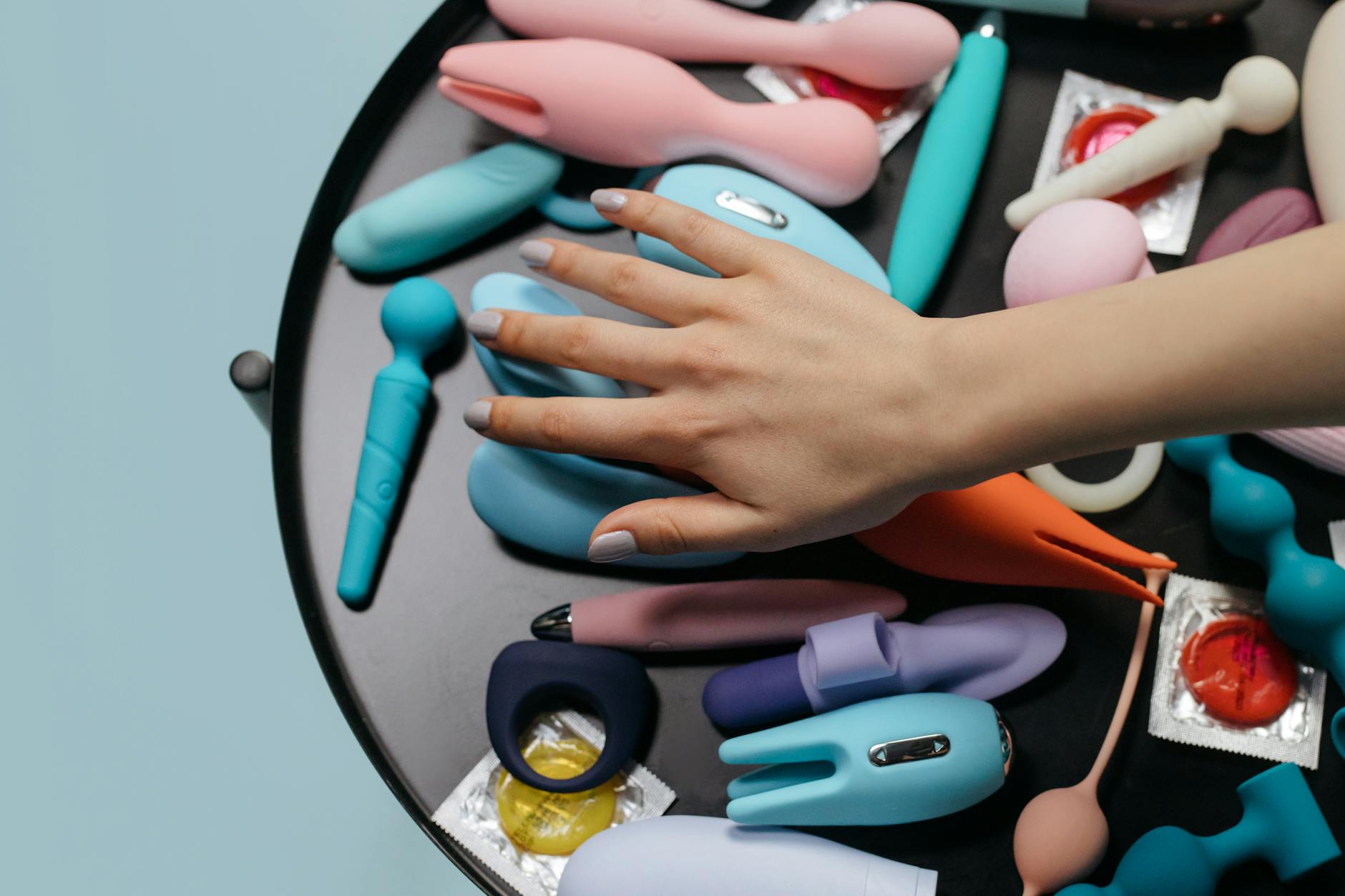
Photo by cottonbro studio on Pexels
The recovery path has three stages. First, you need to prove to your nervous system that pleasure exists outside the obligation framework. Second, you rebuild the connection between arousal and reward. Third, you reintroduce partnered intimacy from a place of genuine want instead of duty.
Stage one: Solo discovery with lemon clitoral vibrators
This isn't masturbation as a quickie. This is you spending 20 to 40 minutes reconnecting with sensation without any endpoint in mind. That means no goal of orgasm. No clock. No pressure to finish before your partner gets home.
Start in a space where you feel completely secure and unhurried. Not your bedroom if your bedroom is associated with obligatory sex. Maybe the bathroom, a guest room, or a locked door with your favorite music. Set a timer for 30 minutes if that helps you relax. You're not racing.
With a lemon vibrator like the clitoral suction models, begin on the lowest setting. The point is sensation discovery, not stimulation. Move slowly around the area. Notice where you feel more responsive. Notice what kind of rhythm actually interests you, not what you think should interest you. This is gathering data about your own body again.
Many people find that after months of obligatory sex, they've forgotten what genuine arousal actually feels like. It's not dramatic. It's often quiet. It's a subtle shift in blood flow, a tiny increase in interest, a moment where the thought of more stimulation feels nice instead of neutral. That's the signal you're looking for.
The goal here is repetition. Your nervous system needs to practice the loop of pleasure without performance. Once a week minimum, ideally twice. Within 3 to 4 weeks, you should notice a shift. Arousal becomes easier to access. Your body starts to remember that pleasure is possible.
Stage two: Building the bridge between solo and partnered
Here's the tricky part. Once you're reconnecting with your own desire, the temptation is to jump back into partnered sex and expect it to feel different. It won't, if the context hasn't changed.
Instead, introduce your partner to your rediscovered pleasure without the expectation of sex. This could mean using your lemon vibrator while they're in the room, or telling them what you've been learning about your body. The conversation matters more than the mechanics.
You might say something like: "I've realized I need to reconnect with my own pleasure before I can share it with you. I'm using this time solo, and I'm learning what actually feels good to me. I want to include you in that eventually, but I need a few more weeks of this first."
That conversation does several things at once. It names the problem (obligatory sex). It sets a boundary (you need solo time). It offers a pathway forward (eventual inclusion). And it communicates that this isn't about rejecting your partner. It's about reclaiming yourself.
After a few weeks of solo practice, you can begin using your lemon vibrator with your partner present, but still with you in control. You're showing them what you've learned. You're letting them observe your pleasure instead of perform it. This is radically different from partnered sex because the focus is entirely on your sensations and responses.
Stage three: Reframing what partnered intimacy means
Once you're accessing genuine arousal again, partnered sex can return. But it needs to return on new terms.
The biggest shift: your partner's pleasure becomes their responsibility, and yours becomes yours. This sounds simple but it rewires everything. No more monitoring whether they're enjoying it. No more managing the pace for them. You're focused entirely on what feels good in your body.
Many couples find that incorporating a lemon vibrator into partnered sex actually makes this easier. If you're using the lem or another clitoral vibrator during sex, your hands are occupied with your own pleasure, which naturally prevents you from slipping back into the caretaker role.
The physical sensation is different too. Clitoral suction vibrators provide a specific kind of stimulation that's hard to replicate with fingers or other toy shapes. That specificity can help your brain distinguish between obligatory sex and this new version. Your body recognizes the pattern and starts to associate it with genuine choice and pleasure.
What to actually do when desire still feels flat
Sometimes you'll go through these stages and arousal is still sluggish. That's not failure. That's information. When obligatory sex has been happening for a long time, sometimes there's deeper stuff underneath. Resentment toward your partner. Unprocessed grief or stress. Disconnection from your body for other reasons.
That's where a conversation with a relationship therapist or sex educator becomes valuable. Not because something is wrong with you, but because desire lives in the intersection of body, emotions, and relational dynamics. A skilled professional can help you untangle which thread needs attention.
What a lemon vibrator does is give you a tool to practice pleasure without that psychological baggage attached. It's not therapy. But it is therapeutic. It's proof to your nervous system that pleasure is still possible, and that's often the first step toward wanting it with your partner again.
The role of communication before, during, and after
Here's what most couples miss: they need to talk about what's happening before they try to fix it sexually. "I've been feeling like sex is obligatory" is a much harder conversation than "I'd like to try using a vibrator together." But the first one has to come first.
If you're not ready for that conversation yet, using your lemon vibrator solo gives you time to clarify what you actually want to say. What do you need from your partner? What's really bothering you? Is it just the obligatory feeling, or is there resentment underneath? Desire can't return until you're clear on those questions.
Once you've used a clitoral vibrator solo and reconnected with your own pleasure, the conversation becomes easier. You can say: "I've been using this time to remember what my body wants. I want to feel that way with you, but I need us to change how we approach intimacy." That's a much clearer ask than "I don't want to have sex."
Why lemon vibrators specifically help with this dynamic
Clitoral vibrators, particularly suction-based models, create a very specific sensation that's different from partnered touch. That difference is actually useful. Your brain can distinguish between obligatory partnered sex and this solo practice because the sensation is novel and you're entirely in control.
The lem and other lemon vibrators are also quiet enough that you can use them without your whole household hearing. That privacy matters. It allows you to build this practice without shame or interruption.
And because the sensation is so reliably pleasurable, it shortcuts some of the waiting. You don't have to spend 30 minutes wondering if arousal will show up. It usually does, because the stimulation is working directly with your neurophysiology, not waiting for your emotions to catch up.
People also ask
Is using a vibrator alone making me less interested in partnered sex?
No. The opposite, usually. When obligatory sex has been killing desire, solo practice with a lemon vibrator often awakens it again. The goal isn't to replace your partner. The goal is to remember what pleasure feels like so that partnered sex can return to that place.
How do I tell my partner I need this solo time?
Directly and early. Something like: "I've realized I need to reconnect with my own pleasure before sex feels good to me again. I'm going to be using some solo time for that. It's not about you. It's about me rebuilding something that's gone quiet." If your partner responds with defensiveness, that's worth exploring in therapy. Their reaction tells you something about whether they see sex as about your mutual pleasure or their access.
Can I use a lemon vibrator with my partner even if I'm not feeling desire yet?
Yes, but frame it differently. Instead of "have sex," frame it as "I want to show you what I'm learning about my body." You're not aiming for sex. You're aiming for connection and communication. Those are the bridges back to desire.
How long does it take to stop feeling obligated?
That depends on how long you've been in the obligatory cycle. If it's been a few months, 4 to 8 weeks of solo practice usually shifts things. If it's been years, you might need 3 to 6 months of consistent work plus some relational repair. The solo practice is just one piece.
What if I still don't want sex after trying this?
Then there's something else going on. Maybe it's depression. Maybe it's hormonal. Maybe your relationship needs deeper work. A lemon vibrator and solo exploration is a good diagnostic tool. If pleasure returns solo but stays absent with your partner, the problem is relational, not physiological. That's also useful information.
Should my partner be involved in this process?
Not in the solo phase. But yes, in the communication and bridge-building phases. Ideally, your partner understands what you're doing and why, and they respect the boundary around solo time. If they don't, that's a relational issue worth addressing, possibly with professional help.
The bottom line
Obligatory sex kills desire because it teaches your body that intimacy is a performance, not a pleasure. Reclaiming pleasure means stepping outside that framework temporarily, using a tool like a lemon vibrator to reconnect with your own arousal, and then reintroducing your partner from that grounded place.
It's not quick. It's not painless. But it works because it's treating the actual problem. Not low libido. Not your body being broken. The actual problem: your nervous system learned that sex equals obligation, and it needs to relearn that sex can equal choice.
If you're ready to start that process, solo time with a lemon clitoral vibrator is the gentlest and most direct path back. Your pleasure matters. Your desire deserves to return. And it usually does, once you give it the space to remember itself.
Ready to talk through your specific situation? Reach out to us.