Let's be real about what self-consciousness does
Self-consciousness doesn't just affect your mood during sex. It literally hijacks your nervous system. When you're worried about how you look, how you sound, whether your body is doing the "right" thing, your brain floods with cortisol. Arousal demands the opposite state: relaxation, safety, permission. The two cannot coexist.
I see this pattern constantly in my practice. People who feel self-conscious about their pleasure report weaker orgasms, longer time to arousal, and often complete shutdown. They're not broken. Their nervous system is doing exactly what it's supposed to do when it perceives a threat. Shame is a threat.
Where shame about pleasure comes from
Three main sources show up again and again:
Childhood messaging. If you grew up in an environment where bodies were treated as problems to manage rather than sources of joy, that's baked in. You're not being irrational. You're living out something you learned before you had language for it.
Partner feedback, real or imagined. Sometimes a partner has made a comment. Sometimes you've imagined what they're thinking. Both hit the same nervous system pathway. The fear isn't always rational, but it's real.
Cultural noise. Women especially absorb contradictory messages. Be sexual but not too sexual. Want pleasure but be modest about it. Enjoy yourself but don't be too loud, too wet, too enthusiastic. That static is exhausting and it accumulates.
None of this makes you prudish or frigid. It makes you human.
How self-consciousness changes arousal
When you're caught in self-conscious thoughts, your body literally cannot build arousal the way it wants to. Blood flow stays shallow. Sensation dulls. You're essentially using 30 percent of your available nervous system capacity because the other 70 percent is devoted to monitoring, judging, and catastrophizing.
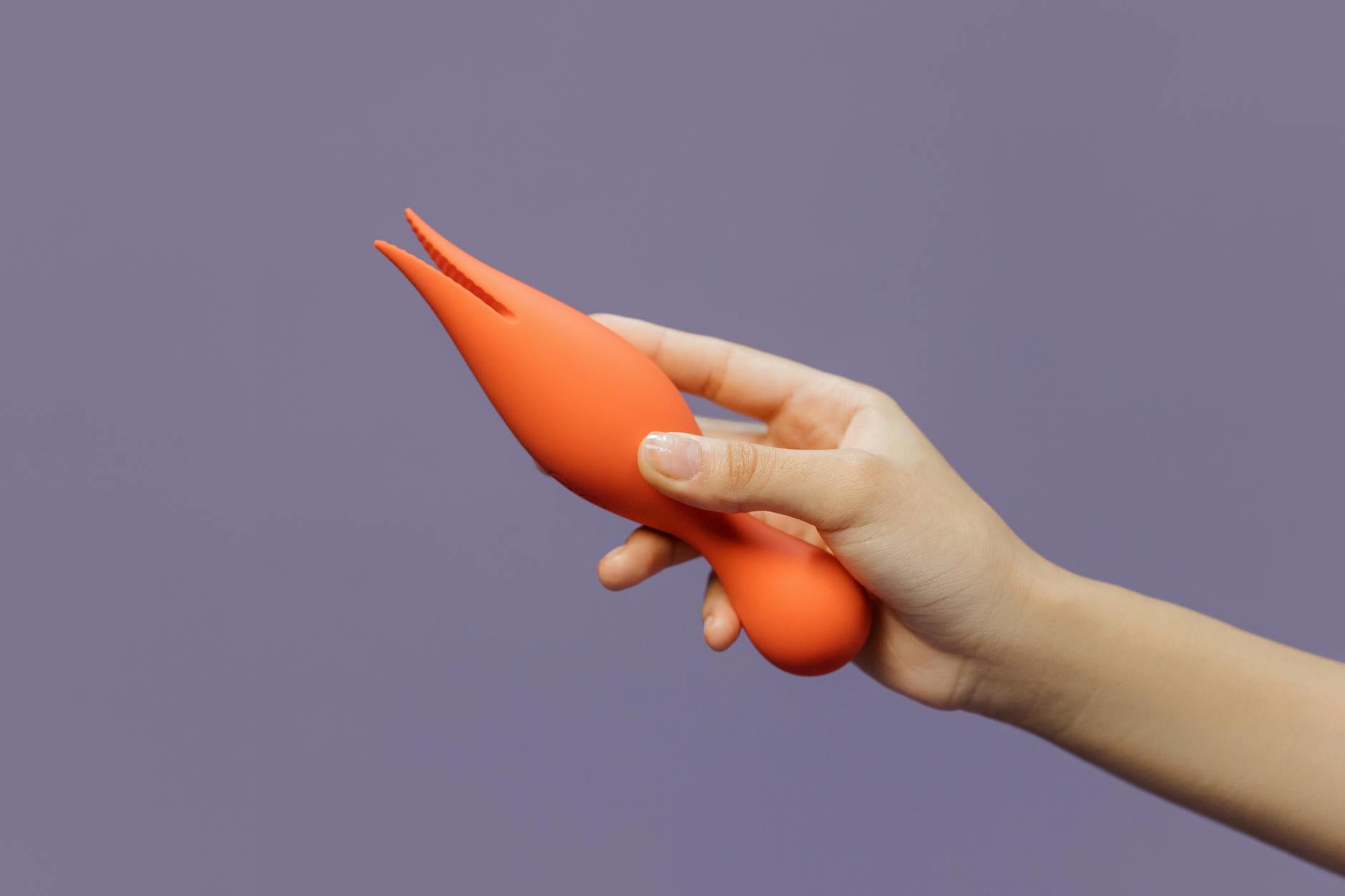
Lemon vibrators like the Lem work differently when shame is in the room because they don't require you to build arousal from nothing. Instead, they can help bypass the thinking mind altogether. Suction stimulation activates direct nerve pathways that create sensation independent of your psychological state. You can literally feel pleasure before your shame-voice has time to interrupt it.
This is not the same as dissociation. You're not escaping your body. You're giving your body a chance to feel safe before your critical mind can object.
The nervous system reset approach
Before you even touch a clitoral vibrator, your nervous system needs a signal that pleasure is safe. Three things help:
1. Reclaim your alone time. This sounds obvious but almost nobody does it. If your only experience of pleasure is partnered, your nervous system learned that pleasure requires an audience. Solo time with lemon vibrators isn't "practice for partnered sex." It's reclaiming pleasure as a standalone act, unmonitored and unjudged. Start here, always.
2. Change the environment. If you usually have sex in the same bedroom, with the same lighting, next to the same sleeping partner, your nervous system has anchored shame to that entire setup. A different room. A locked door. Different lighting. Even a different time of day breaks the association. Your body can't relax into pleasure in a space it associates with self-consciousness.
3. Remove the pressure to perform. This is critical. Tell yourself explicitly: no orgasm goal. No time limit. No "proving" anything. The only outcome that matters is that you get to feel what you feel without narrating it. This is shockingly difficult because we're all conditioned to achieve. Pleasure isn't an achievement. It's a permission.
How to actually use lemon vibrators when shame shows up
Start at the lowest setting. Not because you're "working up" to higher settings, but because lower intensity is easier to feel without the critical voice kicking in. With a lemon clitoral vibrator, you're not building toward anything. You're exploring sensation.
Keep your eyes open or closed based on what feels safest. If closing your eyes triggers intrusive thoughts, keep them open. If open eyes make you feel exposed, close them. There's no rule here except your comfort.
The suction technology in lemon vibrators creates a fundamentally different sensation than traditional vibration. It's less about friction and more about sustained pressure and release. That pulsing rhythm can actually help interrupt anxious thought loops because your brain has to pay attention to something novel. Your critical voice gets quieter.
If self-consciousness creeps in mid-session, don't fight it or feel ashamed of the shame. Pause. Breathe. Notice what triggered it. Sometimes it's a sound. Sometimes a sensation that reminds you of a comment someone made. Notice it. Let it pass. Then return to the sensation without judgment. This is called interoceptive awareness and it's the fastest way to retrain your nervous system.
What changes when you stick with this
Most people report a shift within 3-4 solo sessions. Not a magical transformation. Just a small space opening up where pleasure can exist without a running monologue of criticism. Your arousal builds faster. Sensations feel more vivid. Orgasms, when they happen, don't get hijacked by shame partway through.
The deeper shift comes later. When you've spent time alone with your body, learning what it actually likes, shame loses some of its grip. You've collected evidence that your pleasure is real and valid. Your nervous system starts to believe it.
Bringing this into partnered sex
Once you've rebuilt a baseline relationship with your body solo, partnered sex often transforms. Not because you're magically confident now, but because you have a lived reference point. You know what your body can feel. You know what turns you on. That knowledge is armor against shame.
If your partner has been part of the shame story, you might need to have an actual conversation about it. Not blame, not accusation. Just facts. "When you commented on X, my nervous system learned that pleasure wasn't safe with you." Most partners respond better than you expect because they didn't know the weight of what they were carrying.
Sometimes you need how to use lemon vibrators when partners have different pleasure preferences as a reference point. Sometimes you need to start with solo exploration and bring lemon vibrators into partnered sex only when you feel genuinely ready. There's no timeline. Your nervous system has one, and it's the only one that matters.
The thing about permission
This is the part that changes everything. Shame thrives in secrecy and silence. The moment you name it, claim it, and decide that your pleasure matters, it loses half its power. You don't have to feel confident about your body or your sexuality right now. You just have to decide that self-consciousness doesn't get to make decisions for you anymore.
Using lemon vibrators when you feel self-conscious isn't about escaping shame. It's about building evidence, through sensation and time, that pleasure is real and you deserve it. Your body already knows this. Your nervous system just needs reminding.
People also ask
Is it normal to feel self-conscious about using a vibrator?
Completely normal. Self-consciousness about pleasure is one of the most common barriers people report. It comes from cultural messaging, childhood experiences, and sometimes specific feedback from partners. The fact that you feel it doesn't mean something is wrong with you. It means you absorbed the world's messages about female pleasure. That's universal, not personal failure.
Can self-consciousness actually reduce arousal physically?
Yes. When you're self-conscious, your nervous system activates the sympathetic response (fight-or-flight). Arousal requires parasympathetic activation (rest-and-digest). Your body cannot do both simultaneously. Self-consciousness literally shuts down the physiological pathways that create arousal. This is why lemon clitoral vibrators can help. They create intense sensation that interrupts the thinking mind.
How long does it take to feel less self-conscious during solo play?
Most people report a noticeable shift within 3-4 sessions of consistent solo exploration. But deeper transformation takes weeks or months. Your nervous system learns through repetition. Each time you have pleasure without judgment, you're rewriting the association between arousal and shame. It's not linear. Some sessions feel easier than others.
Should I tell my partner I'm using lemon vibrators if I feel self-conscious?
That depends entirely on your relationship and your comfort level. Some people find that solo exploration with a lemon vibrator is deeply private and necessary. Others find that sharing the journey with a partner builds intimacy. Neither is wrong. Start with what feels safest, and reassess as you go.
What if self-consciousness shows up even when I'm alone?
That's a sign that shame is deeply rooted. You might benefit from talking to a therapist or counselor who specializes in sexual health. Sometimes internalized shame is too thick to penetrate with sensation alone. Professional support can help you trace where it came from and build genuine permission, not just surface-level permission. That's not weakness. That's wisdom.
Can lemon vibrators specifically help with shame-based arousal issues?
Lemon vibrators offer a unique advantage because suction stimulation creates sensation that doesn't require you to be already aroused. Traditional vibrators often need some baseline arousal to feel good. The Lem and other lemon-style clitoral vibrators can jumpstart sensation even when your nervous system is locked up. That gap is where healing happens. You feel pleasure first, then your mind catches up.