The timing problem nobody talks about
Let's be real. New relationship energy is fantastic until you're both naked and one person's body is ready to go and the other's is still warming up. Nobody's doing anything wrong. Bodies just have different ignition timelines. One partner might reach arousal in three minutes. The other needs fifteen. Now there's a weird gap where one person is waiting for the other, or worse, one person is faking readiness they don't actually feel.
This is where lemon vibrators change the game. Not as a performance fix, but as a synchronization tool.
Why the speed mismatch happens (and why it's not a sign of anything wrong)
Arousal isn't a single switch. It's a cascade of things. Blood flow, mental focus, sensitivity calibration, comfort level with this specific person, how stressed you are about work, whether you've eaten enough today. New partners add another layer of complexity because you don't know each other's bodies yet. You don't know what actually works. You're still navigating physical preferences and emotional vulnerability at the same time.
One person might be wired for quick arousal. Another might need sustained touch, mental presence, or emotional reassurance before the body catches up. Neither is better. They're just different rhythms.
The research on couples' sexual satisfaction shows something interesting. The biggest predictor of pleasure in new relationships isn't matching speed or matching preferences. It's matching intention. People who care about their partner's experience, who communicate about timing, and who use tools to bridge gaps report way higher satisfaction than couples who fake synchronicity.
How lemon clitoral vibrators solve the mismatch
A lemon vibrator lets the slower-to-arouse partner access their own pleasure independently while the other partner is present. That sounds simple, but the psychological shift is massive.
Instead of waiting, you're both actively engaged. Instead of one person getting self-conscious, both people are focused on sensation. Instead of guessing whether your partner is actually aroused or just going along with it, you have clear physical feedback.
For the partner who needs longer arousal time, a lemon clitoral vibrator like the Lem gets you to that full arousal state without requiring your partner to maintain a specific rhythm. You're controlling intensity and pace. For the partner who's ready faster, you get to stay engaged without the mental math of slowing down or waiting.
Here's the practical reality. If you've been together three months and you're learning each other's bodies, a lemon vibrator removes one entire source of performance anxiety. It makes pleasure a joint activity rather than a sequential one.
The conversation you actually need to have
Before bringing a vibrator into sex with a new partner, say something like this:
"I love how things feel with you. I also know my body sometimes needs longer to warm up, and I don't want you waiting around while I catch up. I'm thinking about using a vibrator during sex so we can both be fully here at the same time. Is that something you'd be open to?"
That's it. You're not implying they're bad at sex. You're not suggesting they're not enough. You're saying you want to design sex that works for both of you.
Most people respond well to that. They're usually relieved. It takes the pressure off them to be the only source of your pleasure.
If your partner pushes back, that's information too. They might have their own stuff around vibrators, or insecurity, or a different idea of what intimacy should look like. That's a separate conversation to have. But start by assuming good intent and clear communication.
Logistics that actually work
When you're new together, here's what reduces friction.
Keep the vibrator accessible. Not hidden in a drawer downstairs. On the nightstand or in a bedside container. This sounds basic but it matters. If reaching for it feels awkward or secretive, you'll skip it on nights when it would help most.
Start with it during foreplay, not as the grand finale. Use lemon vibrators while you're kissing, while your partner is touching you elsewhere, while you're talking. This normalizes it as a pleasure tool, not a sign that something's missing from the partnered part.
If your partner is inside you and arousal isn't quite there yet, using a clitoral vibrator doesn't interrupt anything. The Lem is designed to work without penetration and alongside it. You control when and how.
Talk about what you're feeling without running commentary. You don't need to narrate every sensation. But "that's good" or "keep going" or "slower" gives your partner real-time feedback about what's working.
The pleasure alignment you're actually building
Here's what people get wrong about "syncing" in new relationships. They think it means matching orgasm timing or reaching the same intensity level at the exact same moment. That's not what this is about.
Pleasure alignment means you're both experiencing genuine arousal and actual sensation, not performance. It means nobody's faking or waiting. It means you're both present. Using a lemon clitoral vibrator helps you get there because it removes the gap where one person is ahead and the other is catching up.
Over time, as you learn each other better, you might find you need the vibrator less often. Or you might discover you both enjoy it even when timing isn't the issue. That's fine. The point right now is reducing the friction in the early months when everything's new and you're both still calibrating.
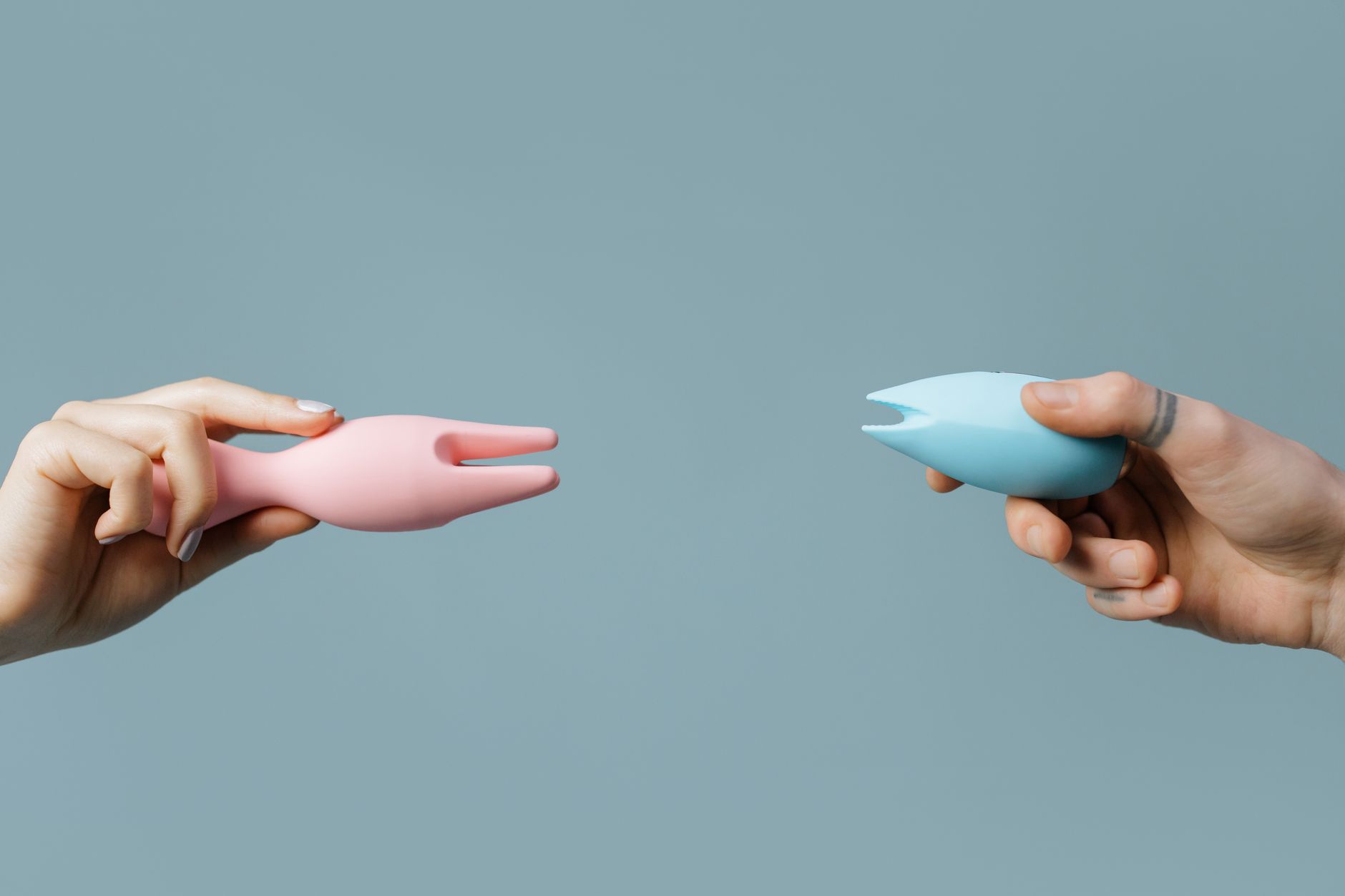
Photo by cottonbro studio on Pexels
What works for bodies that have different sensitivities
New partners also often have different clitoral sensitivity levels. One person might enjoy firm, direct pressure. Another might find that overwhelming right away. Lemon vibrators give you adjustable intensity, so you can start low and build up as arousal increases. You're not stuck at one setting that's either not enough or too much.
If you're sensitive and your partner isn't, the vibrator works for both of you at different pressure levels. If you need more stimulation to reach orgasm, the Lem gets you there without relying on your partner's hand or mouth to maintain exactly the right pressure for twenty minutes.
This matters in new relationships because you're still figuring out what your baseline sensitivity is. Stress, birth control, medication, sleep, hydration. All of it shifts how responsive your body is. A tool that adapts to that makes everything easier.
The mental piece (which is actually 70% of pleasure)
The biggest shift when you introduce a vibrator as a synchronization tool is psychological. You stop waiting. You stop wondering if you're taking too long. You stop performing arousal you don't actually feel. Your partner stops second-guessing whether they're doing something wrong.
For people with a history of faking orgasm or struggling to climax with partners, this is huge. A lemon clitoral vibrator lets you access your own pleasure independent of what your partner is doing. Over time, that builds real confidence. You learn that your body works. You learn what actually feels good. You bring that knowledge into sex.
New relationship partners respond to that. When someone's genuinely aroused and genuinely present, it's obvious. And it's wildly more attractive than someone who's performing.
When to bring it up if you haven't yet
If you've been with your partner a few weeks or months and you haven't mentioned vibrators yet, the window is still open. You don't need to wait until there's a problem. You can bring it up when things are going well.
"I was reading about clitoral vibrators and I'm curious what you think about trying one together. I think it could feel really good."
That's enough. You're not implying pressure. You're expressing curiosity. Let them respond.
If they say yes, awesome. Start with foreplay and see where it goes. If they say no, you can ask what's behind that. Is it a practical concern? An insecurity? A preference for something else? That's useful information for navigating pleasure together.
The couples I work with who communicate about this early always have better sex than those who dance around it. Talking about what you need, what you want to try, and how you're feeling takes courage. It also gets you to genuine pleasure faster.
Why this matters for long-term compatibility
New relationships that build good communication about pleasure usually stick around longer and feel better. That's not because vibrators are magic. It's because you're normalizing the idea that both people's pleasure matters equally. You're using tools to solve real problems instead of pretending they don't exist. You're learning each other's bodies without shame or performance pressure.
When you settle into a pattern in the first few months, you're setting the tone for the whole relationship. If you start by making space for both of your rhythms, that generosity carries forward. If you start by one person accommodating the other, resentment can build quietly.
A lemon vibrator in month three might feel like a small thing. In month thirty, it's the difference between a couple that has genuine pleasure together and one where one or both people stopped really enjoying it.
FAQ
Will using a vibrator make my partner feel inadequate?
Not if you frame it right. The reframe is "I want us both to feel good" not "you're not doing enough." Most people feel relieved when a partner brings this up. It takes pressure off them to be your only source of pleasure. If your partner does feel insecure, that's worth exploring together. But the vibrator itself isn't the problem. The communication is the solution.
What if we have different opinions about vibrators?
Start with curiosity instead of pressure. Ask why they feel hesitant. Is it a preference thing? An insecurity? Past experience? Sometimes people have misconceptions about vibrators. Sometimes they genuinely just don't want one. Both are valid. You can also use one solo and invite them to watch if they're open to that. Attraction and curiosity often follow.
Should I use the vibrator during penetration?
That depends on what feels good. Many people enjoy clitoral vibration during penetration because it combines two different types of sensation. Some prefer them separately. The Lem is designed to work alongside penetration, so it's definitely an option. Experiment and see what actually feels right for your body.
How do I bring this up without it feeling like rejection of my partner?
Be specific about what you're feeling, not what they're doing wrong. "I think it would feel amazing to explore this together" is different from "I'm not satisfied with how things are." One's an invitation. The other's a criticism. Lead with invitation.
What if we're already having great sex?
Then a vibrator is just another layer of pleasure to explore. Plenty of couples with excellent sexual connection still enjoy adding tools because it opens up new sensations. You don't bring this in as a fix. You bring it in as expansion.
Is it weird to use a vibrator the first time you're trying it together?
It's way less weird than you think. You're both probably a little nervous, but that's normal for anything new. The key is going slow, checking in with each other, and being willing to laugh if something feels awkward. Some of the best couples' moments come from the willingness to be vulnerable and try something together even though it's unfamiliar.
The real reason this matters
New relationships are a chance to build pleasure patterns that actually work. Not patterns that look good on screens or in movies, but patterns that feel real for your specific bodies in your specific dynamic. Using lemon clitoral vibrators to sync arousal isn't a workaround. It's a way of saying both people matter here. Both people deserve to feel good. Both people deserve to be present and genuine instead of performing for each other.
Start the conversation. See what happens. Your future self in this relationship will be grateful you did.