Let's start with the hardest part
You've been told pleasure is off the table. Either directly ("avoid sex during flares") or indirectly (the shame around pain makes asking feel impossible). But here's what the science actually says: pleasure and pain aren't in the same neural channel. They can coexist, and in some cases, clitoral stimulation can actually downregulate pain signals.
I'm not suggesting you push through agony. I'm suggesting that pelvic pain conditions don't automatically revoke your right to pleasure. They just require a different approach.
How pelvic pain changes the sensation equation
Endometriosis, adenomyosis, pelvic floor dysfunction, and other chronic pelvic conditions affect pleasure through several pathways. Some are purely physical. Others are psychological.
Physically, inflammation or scar tissue can make penetration painful while leaving clitoral sensation intact. The pelvic floor, when hypertonic (too tight), sends false alarm signals that read as pain or pressure even during touch that should feel good. Hormonal changes from conditions like endometriosis can dampen arousal and lubrication, meaning the usual warm-up time isn't enough.
Psychologically, pain breeds anticipatory anxiety. You've learned that sex might hurt, so your nervous system tenses before anything even starts. This is not a character flaw. It's a protective mechanism that's working too hard.
The good news: clitoral vibrators like those from Lemon Pleasure Toy sidestep most of these problems. Clitoral stimulation doesn't require penetration, doesn't rely on lubrication (though you can still use it), and research shows that the intense, focused sensation of suction-style vibrators can actually interrupt pain signals going to the brain.
Why suction vibrators work differently for pelvic pain
Traditional vibrators work through oscillation or rotation. That's fine, but they require direct tissue contact and sustained pressure. For someone managing pelvic pain, that pressure can feel inflammatory or triggering.
Suction vibrators, including the Lemon clitoral vibrator, work through gentle air-pulse technology. The sensation is concentrated but not aggressive. It pulls rather than hammers, which feels markedly different on sensitized tissue.
More importantly, suction patterns can be modified. You can start at patterns 1 or 2 on a lemon vibrator (low, rhythmic pulses) instead of jumping to intensity. The gentleness means you can explore pleasure without the vigilance that comes with bracing for pain.
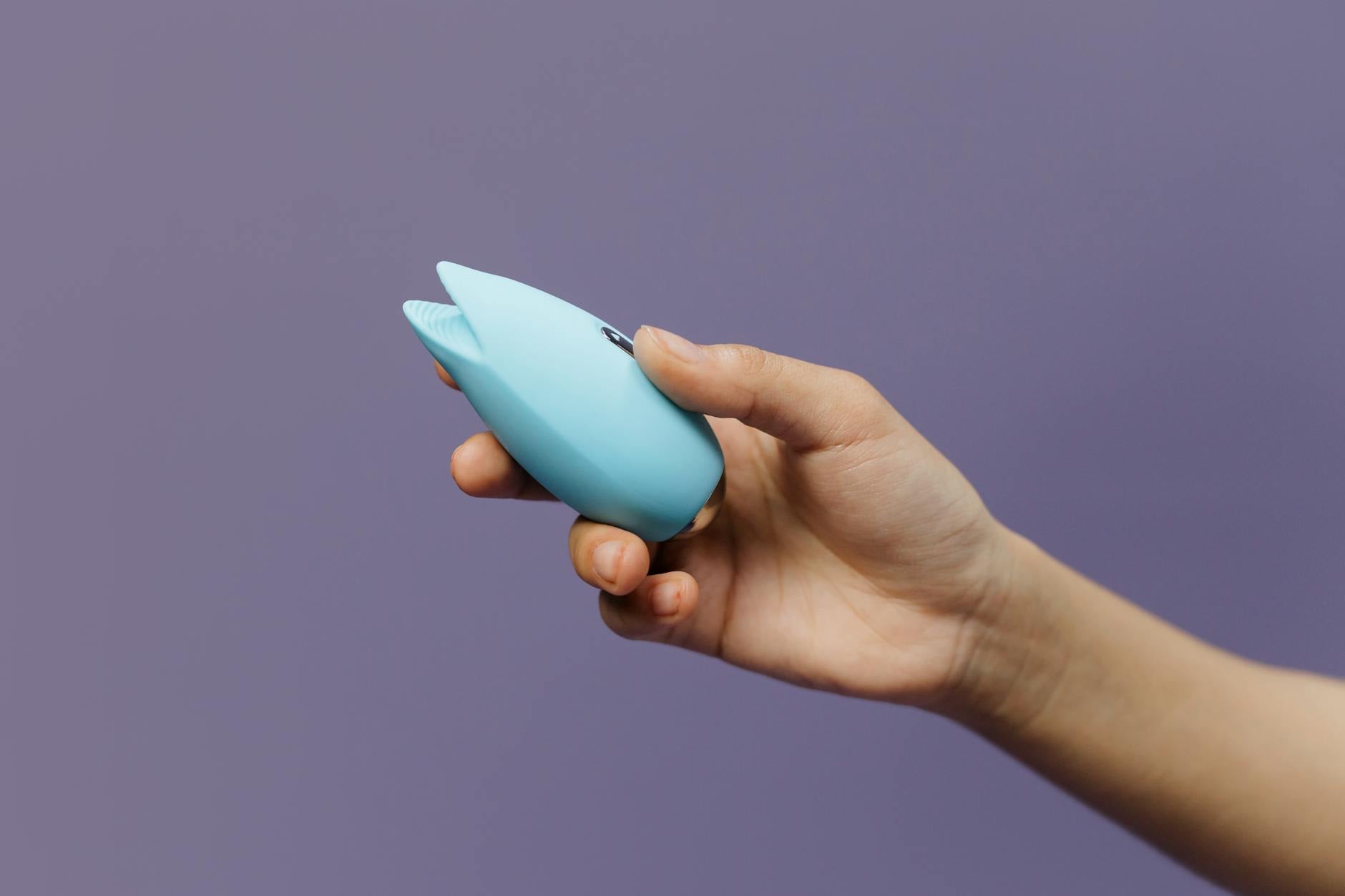
Photo by cottonbro studio on Pexels
Practical setup before you start
Four things that matter before touch happens.
First, timing. If you menstruate or have a cycle (even with endo or adenomyosis, which distort the cycle), pay attention to your pain calendar. Some people find clitoral pleasure easier to access in the follicular phase (lower inflammation). Others find it's actually easier during menstruation because cramping pain is familiar and clitoral sensation interrupts it. Track your own pattern. There's no universal rule.
Second, your nervous system state. Pain amplifies when you're stressed, sleep-deprived, or already dysregulated. If you're in a flare or high-pain week, this might not be the week to explore. A calm nervous system can process the same touch as either pleasure or pain. An activated one defaults to pain. Rest first. Pleasure later.
Third, position. Lying on your back with your pelvis slightly elevated (pillow under your hips) puts the least pressure on your pelvic floor. Sitting upright works for some people. Avoid positions that press your pelvis against something or create internal pressure.
Fourth, clear space. You need zero interruptions. Your attention needs to be entirely on what feels good, not on whether someone will walk in, or whether you "should" be productive. Pelvic pain is exhausting. Pleasure has to feel worth the attention.
How to use a lemon vibrator safely with pelvic pain
Start at the lowest setting. With a lemon clitoral vibrator, that means pattern 1 or 2. Spend 5-10 minutes just letting your body get used to the sensation before you layer in any arousal intention. This isn't foreplay. This is permission.
If intensity feels tolerable, stay there. Increase only if you want to, not because you feel you should be "progressing." Some people find that the low settings of lemon vibrators are their sweet spot forever. That's not limitation. That's information.
Pay attention to your pelvic floor. If you notice clenching, pause and actively relax. Breathe into your belly instead of your chest. Pelvic floor physical therapy breathing (long exhale, longer than your inhale) can help here.
Watch for pain that feels different from your baseline. Baseline pain from your condition is old data. New pain, sharp pain, or pain that radiates differently is new information. If it shows up, stop.
Lubrication is optional but helpful. Even if you self-lubricate fine, adding water-based lube can reduce friction and make touch feel softer. This isn't about fixing yourself. It's about reducing variables that might complicate sensation.
The role of partner communication
If you have a partner, they need to understand something: your pain condition doesn't make you a bad lover or a low-desire person. It makes you someone whose body has constraints. That's navigable.
The hardest conversation is the one where you admit that you want pleasure but you're scared. Partners often hear "I have pain" and translate it as "Don't touch me." What you actually mean might be "Touch me differently." That's a completely different request.
Consider showing your partner how you use your lemon vibrator. Not as a spectacle, but as information. Let them understand what patterns feel good. Let them see your body relaxing. This reduces the "Is she okay? Should I stop?" guessing game that paralyzes partners during intimate moments.
Then, if you want partnered pleasure, they can mirror that knowledge. Some people find that having their partner hold the vibrator while they guide it gives them back a sense of control and connection that pain has taken.
When flares happen
A flare is not a failure. It's a reminder that your body has limits this week. A flare is when you pause. Not forever. Just this week.
Use that time for other pleasures. Orgasm isn't the only metric of pleasure. Some people find that gentle, non-sexual touch (a partner's hand on their back, a good massage) feels better than anything sexual when pain is spiking. Honor that.
When the flare passes, you haven't lost ground. Your lemon vibrator is still there. Your capacity is still there. You're just respecting your body's current bandwidth.
Building confidence over time
Pelvic pain creates a shame narrative. "My body is broken. I'm broken. Pleasure is for people without pain." That's not true, but it feels true in your nervous system.
Each time you use a lemon clitoral vibrator safely, without pain increasing or flare extending, you're rewiring that narrative. Your body learns: touch can be pleasurable. My condition doesn't erase my sexuality. I can have agency here.
That rewiring doesn't happen in one session. It might take months. But it happens.
When to bring in professional support
If pain during pleasure is getting worse, not better, see a pelvic floor physical therapist. (Not a regular PT. Specifically pelvic floor trained.) They can teach you how to relax pelvic floor muscles that are stuck in protection mode.
If sexual pleasure triggers flares consistently, talk to your gynecologist or the specialist managing your condition. There might be a timing or medication adjustment that helps.
If you're struggling with the psychology of pain and sexuality, consider talking to a sex therapist or therapist who specializes in chronic pain. Pelvic pain is trauma in slow motion. Your nervous system needs help learning that pleasure is safe.
The bottom line
Your pelvic pain condition is real. Your right to pleasure is equally real. A lemon clitoral vibrator is a tool that respects both. It doesn't cure your condition. It doesn't erase your pain. But it does offer a way to access sensation that feels good, on your timeline, with your boundaries intact. That's not small.
People also ask
Can I use a clitoral vibrator during an endometriosis or pelvic pain flare?
It depends on your individual pain threshold and what the flare feels like. Some people find that gentle clitoral stimulation actually interrupts pain signals during a flare. Others find that any arousal-related pelvic blood flow intensifies cramping. The only way to know is careful experimentation. If you try it and pain increases within minutes, stop. If it feels neutral or good, you've found a tool for flare week. Keep lube and the lowest vibrator pattern nearby.
Does using a vibrator make pelvic pain conditions worse long-term?
No research suggests that clitoral vibrator use worsens endometriosis, adenomyosis, or pelvic floor dysfunction when used without pain. If you're experiencing pain during or after vibrator use, that's data telling you to adjust (lower intensity, different pattern, different position, or pause altogether). But pleasure itself doesn't inflame tissue or worsen the condition. Many people find that the mental health benefit of accessing pleasure actually reduces stress-related pain flares.
What pattern setting on a lemon vibrator is safest for pelvic pain?
Start at the lowest setting your vibrator offers (pattern 1 on most lemon clitoral vibrators) and stay there as long as it feels good. Some people never move beyond pattern 2 or 3, and that's fine. The goal isn't to work your way up the intensity ladder. It's to find the level that gives you pleasure without triggering pain. That might be pattern 1 forever, and that's a win.
Can I use a lemon vibrator if I have pelvic floor dysfunction?
Yes, but with one caveat: pelvic floor dysfunction often involves muscles that are chronically clenched. Vibrator use can sometimes trigger more clenching as a protective response. If this happens to you, pair vibrator use with intentional pelvic floor relaxation breathing (long, slow exhales). Some people benefit from using their vibrator after doing pelvic floor physical therapy stretches, when the muscles are already in a relaxed state. Work with a pelvic floor PT to figure out your sequence.
Will my partner understand why I need a vibrator if I have pelvic pain?
Maybe, but only if you explain it clearly. Partners often assume vibrators mean they're not enough, or that you're unhappy. What you're actually saying is: "My body has a condition that makes partnered pleasure complicated. A vibrator lets me access pleasure on my own terms, and that actually makes me feel more connected to myself and to you." That's not rejection. That's self-advocacy. A partner worth keeping will get that.
When should I stop using a vibrator and see a doctor about pelvic pain during pleasure?
Stop immediately if you experience sharp, new, or radiating pain during or after vibrator use. This is different from your baseline pelvic pain. New pain means something's changing, and you need professional eyes on it. Also see a doctor if vibrator use consistently triggers flares or worsens your symptoms over weeks. That pattern suggests your nervous system or pelvic floor needs support from a physical therapist or pain specialist, not just a vibrator.