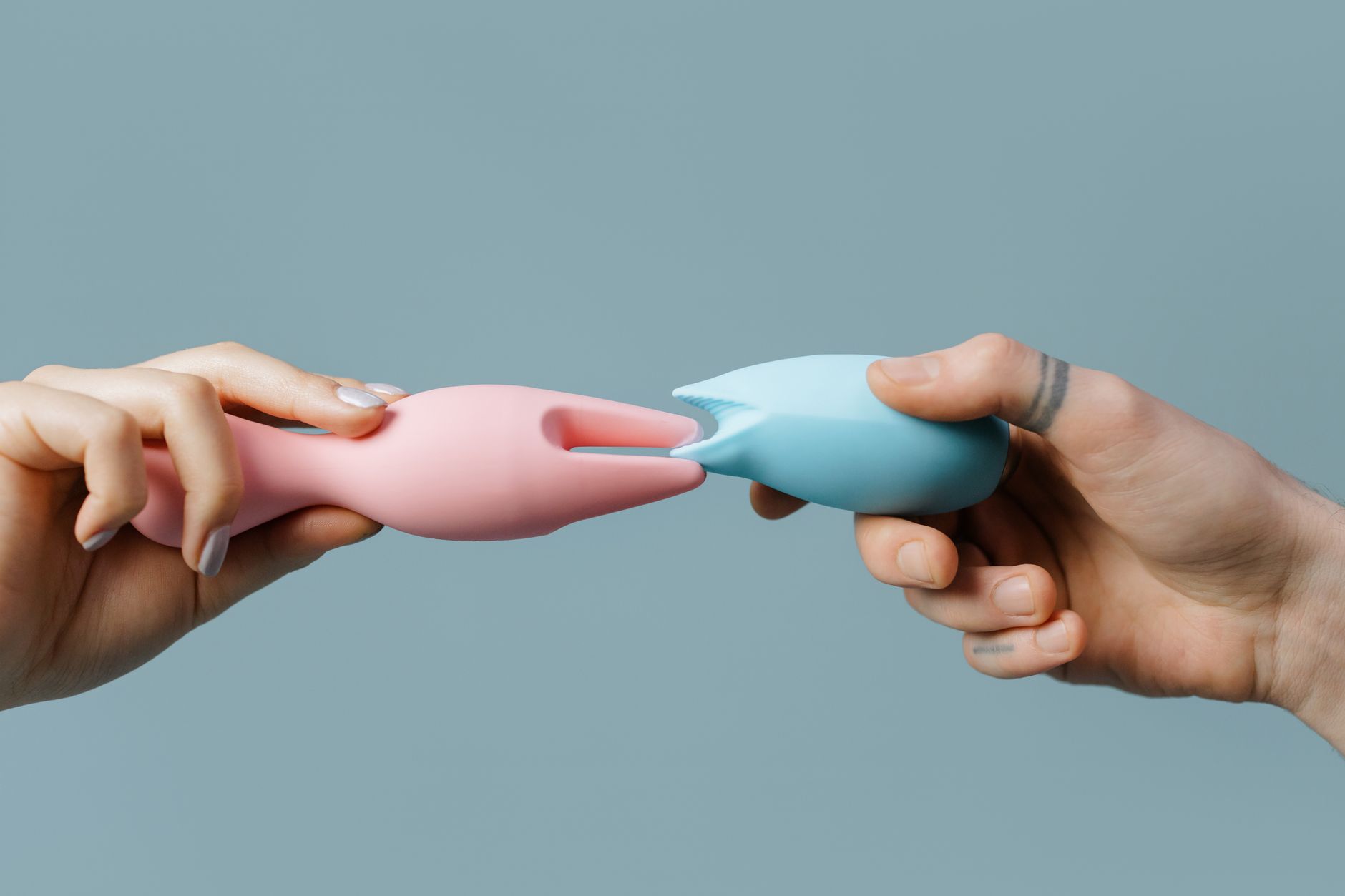
How to Use Lemon Vibrators When You Have Low Libido From Stress or Burnout
Chronic stress doesn't just kill your mood. It rewires your nervous system. Here's how to use a lemon clitoral vibrator to soften that dysregulation and remember what pleasure actually feels like.
When you're burned out, sex is the last thing on your mind. Not because you're broken or your relationship is dying. Because your nervous system is in survival mode, and survival mode doesn't leave room for pleasure. Stress floods your body with cortisol, which suppresses dopamine and the hormones that fire up desire. You can't want what your biology is literally preventing you from feeling.
The problem is that low libido from burnout gets confused with low libido from everything else. Your partner thinks you're not attracted to them. You think something is wrong with the relationship. But the real issue is simpler and harder at once: your body has forgotten how to relax enough to want anything.
That's where a lemon clitoral vibrator enters the picture.
Here's the mechanism: your clitoris has about 8,000 nerve endings concentrated in a space smaller than a pea. When you're stressed, those nerves are quiet. Chronic tension lives in your pelvic floor, which means that whole region is essentially numb to subtle sensation. You could sit next to your partner and feel absolutely nothing.
A clitoral vibrator like the Lemon bypasses the need for arousal to already be there. The vibration stimulates those nerves directly, independent of your emotional state or your cortisol levels. You're not trying to want something. You're giving your nervous system a signal: "Hey. It's safe. Pleasure is possible here."
This matters because stress dysregulation is a learned pattern. Your body has learned that it's not safe to relax. Using a lemon vibrator in a low-pressure, solo context teaches your nervous system a new pattern. You're literally retraining your capacity for sensation.
Don't approach this like you're trying to fix a problem. Approach it like you're running an experiment.
First, timing. When you're burned out, the last thing you need is pressure to perform for a partner. Pick a time when you're alone, when there's zero expectation or audience. Your nervous system needs permission to be weird, messy, and unfocused.
Second, environment. Low light, closed door, phone on silent. You're not setting a romantic scene. You're creating a space where your body can relax without vigilance. Burnout survivors are often hypervigilant. The more boring and safe the environment, the faster your nervous system will settle.
Third, no goal. This is crucial. You're not trying to orgasm. You're not trying to feel anything in particular. You're exploring what sensation is available right now, in this moment, with this tool. Many burned-out people find that the first few sessions feel totally numb. That's normal. You're not broken. Your nervous system is just very, very busy.
Start at a low pattern on the lemon vibrator. Most burned-out bodies need a gentler entry point than you'd expect. High intensity can feel overwhelming when your nervous system is already flooded.
Place it directly on the clitoris and just sit with it for a minute. Don't move it around. Don't try anything. Just feel the sensation. If you feel nothing, that's data. Sit longer.
After a couple of minutes, try a slow side-to-side motion. Some people find that rhythm more grounding than static pressure. Others prefer small circles. There's no right way.
If you feel the urge to speed up, slow down instead. This goes against every instinct we're taught about pleasure. But when you're dysregulated, slowing down is how you signal to your nervous system that everything is okay. Speed comes later, once your body remembers what calm feels like.
Set a timer for 15 minutes. That's long enough to notice something shifting, short enough that it doesn't feel like a project. If nothing happens by 15 minutes, great. Put the vibrator away. You just trained your body that pleasure is possible, even if it didn't arrive today.
The first thing that usually shifts is sensitivity. After 3-4 solo sessions with the lemon vibrator, the numbness often starts to lift. Not because the vibrator is magic, but because your nervous system has begun learning that it's safe to feel.
Second, desire starts showing up differently. Instead of spontaneous lust arriving out of nowhere, you might notice a subtle awareness: "Oh, I could probably feel something if I wanted to right now." That's your nervous system coming back online. For someone burned out, that's huge.
Third, and this matters if you have a partner, your libido might return but on a different schedule. Stress kills responsive desire, where you need your partner to initiate arousal. Some people find that solo pleasure with the lemon vibrator comes back first, and partnered sex comes later. That's not a bad sign. It's actually a sign that your body is recalibrating, one sensation at a time.
Don't rush this. Many people make the mistake of jumping into partnered sex the moment they feel a flicker of desire again. That often kills it, because now there's someone else's needs in the equation, and your nervous system hasn't fully settled yet.
Instead, use solo sessions with the lemon vibrator as your baseline. Once you're consistently able to feel pleasure and sometimes reach orgasm alone, you can start exploring with a partner. Some couples find that watching each other use a clitoral vibrator is a bridge. Others prefer to build general physical affection and non-sexual touch first, then move toward sex.
The key is permission. Your partner's job isn't to fix your libido. Their job is to understand that you're rewiring your nervous system, and that takes time. If they can't accept a few weeks of lower-frequency sex while you rebuild, that's a separate relationship conversation.
Burnout doesn't just lower libido. It lowers your sense of agency. You feel like things are happening to you, not like you're making choices. Using a lemon vibrator is small, but it's a choice. It's you saying: "My pleasure matters. I deserve to feel good, even though my life is chaotic." That's not selfish. That's survival.
Most people who've rebuilt desire after burnout say the vibrator was the entry point, but the real shift was reclaiming their body as a source of pleasure instead of just a vessel for productivity and stress. The lemon vibrator helped them remember.
If you're stuck in the burnout cycle and sex has disappeared from your life, start here. Not because you're broken. Because your nervous system needs an on-ramp back to pleasure, and sometimes that on-ramp is a tool that doesn't care whether you're motivated or present or "in the mood." The vibration does the work your dysregulated body can't quite do alone.
The point is: this is a doorway, not a destination. You're not trying to get back to how things were before burnout. You're building a new relationship with your body and your pleasure, one that's based on what you need now, not what you used to feel.
It varies wildly. Some people feel a shift in 2-3 weeks of regular lemon vibrator use. Others take 6-8 weeks before desire shows up consistently. The timeline depends on how deep the burnout goes, what's still stressing you, and whether you're addressing the stress itself or just the symptom. A vibrator can help you feel pleasure again, but if you're working 70-hour weeks, the numbness will keep trying to come back. Pleasure returns fastest when you're also addressing the actual source of the stress.
Absolutely. Antidepressants and stress both suppress desire, and they often work through similar pathways. A clitoral vibrator bypasses some of that suppression by activating nerves directly. Many people find that the combination of medication plus vibrator use gets them back to pleasure faster than either alone. If you want to explore whether your medication is part of the problem, that's a conversation for your doctor, but the vibrator can help in the meantime.
That's not failure. It's information. If you've used a lemon vibrator consistently for 3-4 weeks and feel nothing, there's usually something else going on: deeper pelvic floor tension, a medication effect you haven't acknowledged, a relationship dynamic that's actively suppressing desire, or burnout so severe that your nervous system needs professional support. Consider talking to a therapist who specializes in trauma or burnout, or a pelvic floor physical therapist. The vibrator is a tool, not a cure for everything.
Maybe, but probably not first. When you're dysregulated, having someone else control the stimulus can feel overwhelming. Your nervous system doesn't know if it's safe to relax with another person yet. Start solo. Once you've retrained your body to respond to sensation without vigilance, partnered use becomes more natural. Some couples find that after solo sessions, they love using the vibrator together. Others find that it stays a solo tool. There's no wrong answer.
That depends on your relationship. Some partners feel relieved and want to be part of the process. Others feel threatened. A few genuinely don't need to know. The key question is: does transparency help you rebuild desire, or does it add pressure? If telling your partner means they'll want to watch or participate before you're ready, that's not helpful. If telling them means they'll understand why you're not initiating sex right now, that's very helpful. Only you know which category applies.
It probably will, to some degree. Stress is part of life. The difference is that your body will remember what pleasure feels like. Using the lemon vibrator during high-stress periods becomes maintenance, not recovery. You're reminding your nervous system: "Hey, it's still possible to feel good, even though everything else is loud." That reminder matters more than you'd expect.
Burnout doesn't mean your body is broken. It means your nervous system learned that safety meant shutdown, and pleasure was a luxury you couldn't afford. A lemon clitoral vibrator helps unlearn that pattern. It's not about forcing desire or performing sex you don't feel. It's about giving your body permission to feel good again, one gentle sensation at a time. The vibrator just happens to be the tool that makes that possible.