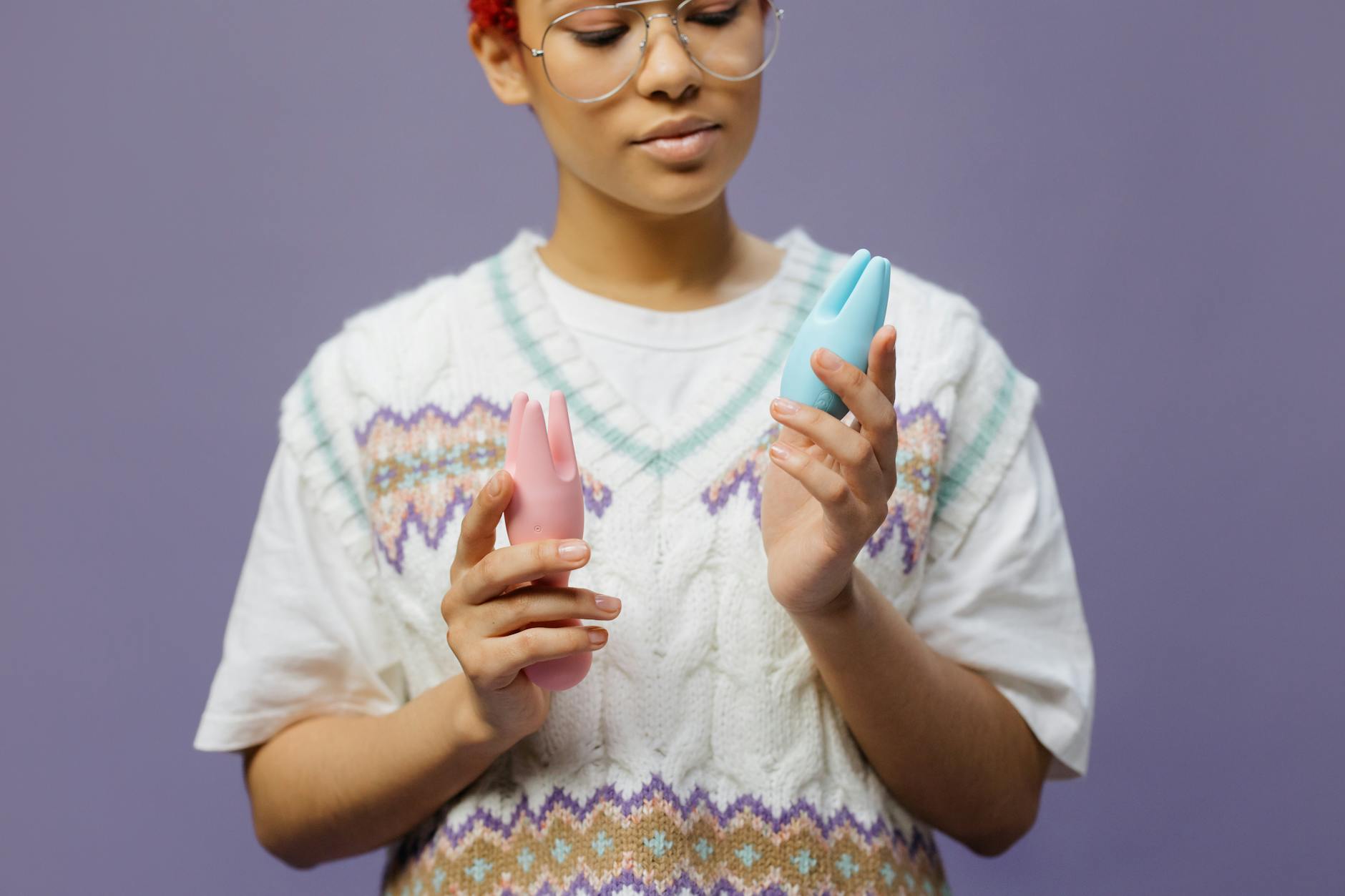
Let's start with the truth nobody tells you
Solo exploration with lemon vibrators isn't the warm-up act. It's the main event. And yes, I say that as someone who spent twenty years helping couples rebuild intimacy. The couples who actually get somewhere are the ones who figured out their own pleasure first, then brought that knowledge into the relationship.
Here's what happens when you don't: you end up performing sexuality instead of experiencing it. You're watching yourself from above, calibrating to what you think your partner wants, splitting your attention between sensation and self-consciousness. No wonder partnered sex feels distant sometimes.
Why solo pleasure matters more than you think
There's actual neuroscience here. When you explore your body alone, your brain isn't managing social risk. You're not performing. There's no audience, no timeline, no pressure to finish on schedule. That changes everything about what your nervous system learns.
Your body has capacity for pleasure that stays dormant if you never practice accessing it alone. Think of it like a language you've never spoken. You might understand it passively, but you can't think fast enough to speak it fluently in conversation. Solo play is how you become fluent in your own arousal.
Honestly, the couples I work with who report the most satisfying sex lives are the ones who both have an established solo practice. Not because they need to escape the relationship. Because they know exactly what switches them on, and they can communicate that to their partner without hesitation.
Setting yourself up for success
Three things matter: privacy, time, and permission.
Privacy is non-negotiable. This isn't prudishness. It's neurological. Your sympathetic nervous system (fight-or-flight) gets activated by even the thought of being discovered. That keeps you tense. You can't relax into pleasure if part of your brain is listening for footsteps.
If you live with others, lock the door. Use headphones. Make it clear this is your time. You deserve that boundary, and anyone who resents it is signaling something important about how they view your body and your needs.
Time means not rushing. Forty-five minutes is reasonable; thirty minimum. The first fifteen minutes of solo exploration rarely produces much sensation because your body is still arriving. Your blood isn't fully diverted to your genitals. Your breath is shallow. You're mentally checking email.
That's not failure. That's the warm-up. By minute twenty-five, things shift. Your pelvic floor relaxes. Your arousal actually builds.
Permission is the weirdest obstacle for most people. You might feel guilty. Selfish. Like you should be doing something else. That's worth examining before you start. Solo pleasure isn't taking something from your partner or your responsibilities. It's taking care of yourself, which actually makes you a better partner and a better human.
How to actually start exploring with lemon vibrators
Let's be specific. You've blocked out time, locked the door, and you have a lemon clitoral vibrator in your hand. Here's what actually works.
First pass: low pressure, no expectation. Turn the device to a low setting. Don't use it yet. Hold it. Get familiar with the weight, the temperature, how it feels in your palm. Lemon vibrators are designed to feel friendly, not clinical. Notice that.
Second: explore your own body without the device. Touch your thighs, your inner arms, the back of your neck. Pay attention to where sensation lives in your body. Some people are sensitive on their collarbones. Others on the inside of their wrists. Your vulva isn't the only erogenous zone, and warming up the whole system makes the main event feel completely different.
Third: use the vibrator externally first. Start on your outer labia, away from your clitoris directly. The tissue there is less sensitive, so you're building arousal gradually. Notice how the suction or vibration feels different in different areas. You're gathering data about your own body.
Fourth: breathe. People hold their breath during solo play the same way they do during vulnerable conversations. Your nervous system interprets breath-holding as danger. Slow, deep breaths literally tell your parasympathetic nervous system that you're safe. Which you are.
Finally: no timeline for orgasm. This is crucial. If you're timing yourself ("I have twenty minutes"), you activate performance pressure, which contradicts the whole point of solo exploration. Some sessions will lead to orgasm. Some will be about sensation and learning. Both are valuable.
What you're actually learning in these sessions
This isn't masturbation as a release valve. It's data collection about your body. By the third or fourth session, you'll notice patterns. Maybe you come alive when the vibration hits a particular spot. Maybe you need longer warm-up than you thought. Maybe your arousal actually peaks around minute thirty-five, not fifteen.
Write that down. Not because you need to keep records. But because your brain will forget it the moment you're in a partnered scenario and your attention splits. External notes become internal knowledge.
You're also building nervous system resilience. Each time you practice solo pleasure, you're essentially telling your body that arousal is safe. That sensation is welcome. That you deserve to feel good. That becomes your baseline assumption, which transfers directly into how you show up with a partner.
The emotional part nobody talks about
Sometimes exploration brings up unexpected feelings. Grief. Anger. Disconnection from your body. That's not a sign something's wrong. It's a sign you're finally paying attention to places you've been numb.
If you cry during solo play, keep going (unless your body's asking to stop, which is different). Arousal and emotional release are weirdly intertwined. Your pelvic floor holds tension. When that releases, sometimes emotions release with it.
If you feel nothing after multiple sessions, that's also fine. Numbness is often a survival strategy your body learned at some point. It doesn't mean you're broken. It means your nervous system might need support beyond what solo play alone can offer. That's when talking to a therapist or a gynecologist who specializes in sexual health makes sense.
The awkward question: does this mean there's something wrong with my relationship?
No. Solo exploration and partnered sex aren't competing. They're complementary. The couples I work with who struggle aren't the ones with robust solo practices. They're the ones who've never spent time alone with their own pleasure.
Solo exploration actually improves partnered sex because you stop expecting your partner to figure you out. You know what you want. You can ask for it. You can guide them. That's more intimate, not less.
Moving forward
Start this week if you can. Pick a lemon vibrator that appeals to you, block time when you won't be interrupted, and commit to three sessions before you evaluate how it's going.
You're not fixing anything. You're practicing. The pleasure you discover alone becomes the foundation for everything else. That's not selfish. That's smart.
If you're ready to have deeper conversations about pleasure in your relationship after this, that's a different skill set entirely. But the solo foundation comes first.
People also ask
How often should I be exploring solo pleasure with lemon vibrators?
Start with one session per week and see how that feels. Some people find weekly rhythm works; others prefer twice weekly. The frequency matters less than consistency. Your nervous system learns through repetition, so a steady practice is more valuable than sporadic marathons. If you find yourself thinking about solo time throughout the week, that's your body telling you it's ready for more.
What if I feel guilty about solo pleasure when I'm in a relationship?
That guilt often comes from old messaging about sex being something you do with someone else, not for yourself. But your pleasure belongs to you first. You're not taking something from your partner by having solo practice. You're actually bringing better presence to partnered sex because you're not performing or searching. Many couples find that once both partners establish solo practices, the quality of partnered sex improves because there's less pressure and expectation.
Should I tell my partner I'm exploring solo with lemon vibrators?
That depends on your relationship and what transparency means to you both. Some couples benefit from that conversation; others prefer privacy. There's no universal rule. What matters is that you're not lying if directly asked. The practice itself doesn't need to be a shared activity unless you both want it to be. Your body and your pleasure are yours to explore on your own terms.
Can I use lemon vibrators for solo exploration if I've never been able to orgasm?
Yes, and solo exploration is often the best place to start if orgasm feels elusive. With zero audience pressure, your nervous system can relax more fully. Sometimes people discover they can orgasm alone but not with a partner because of performance anxiety. That's information worth having. Start with a low-intensity lemon toy and focus on sensation over outcome. Orgasm might come. It might not. Both are fine.
What's the difference between solo pleasure and masturbation?
They're not really different. The language is just different. Solo exploration or self-pleasure might feel less clinical if "masturbation" carries shame for you. The practice is the same. You're exploring sensation, learning about your body, and building nervous system capacity for pleasure. Call it whatever feels right.
How long does it take to feel comfortable exploring solo with a vibrator?
Most people feel significantly more comfortable by session four or five. Your nervous system starts to relax into the routine. The device itself becomes less strange. By week three, many people report that solo time feels genuinely anticipated rather than anxious. If you're still uncomfortable after four sessions, that's worth exploring with a therapist who specializes in sexual health. Discomfort often has roots that solo practice alone won't address.