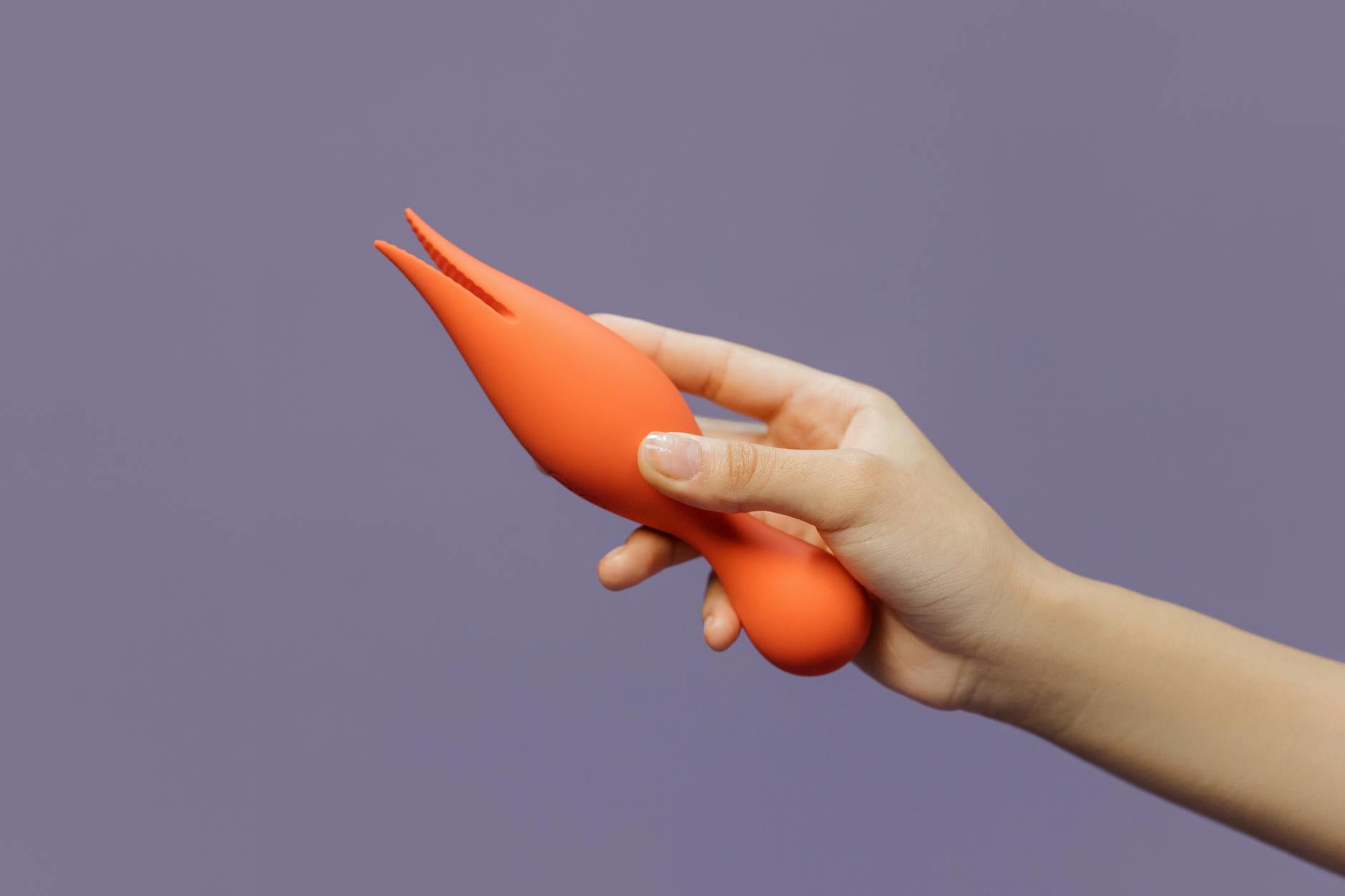
How to Choose the Right Lemon Vibrator Settings for Your Body Type
Not every setting works for every body. Here's how to match your lemon clitoral vibrator to your unique anatomy and sensitivity for real, consistent pleasure.
Most people buy a clitoral vibrator, fiddle with it once, and assume that pattern 3 is just how it feels. But your body isn't a universal switch. The right intensity and pattern for you depends on tissue thickness, nerve density, pelvic floor tension, and honestly, what you ate for breakfast. It's not magic. It's anatomy.
I work with couples and individuals on pleasure and intimacy, and the single most common complaint I hear is "my lemon vibrator doesn't work anymore." What they usually mean is "I'm using the same setting that worked last month." Your body changes. Your settings should too.
A lemon sucker toy works through suction, not buzzing. This means the intensity isn't about vibration frequency. It's about the level of pressure and the speed of the suction pulse. Think of it like the difference between a gentle pinch and a firm squeeze.
Here's what I tell clients: if you have thinner or more delicate tissue (common after hormonal shifts, postpartum, or just your baseline anatomy), starting at intensity 5 or higher will feel numb rather than good. Your nerve endings need the stimulation to register. Too much pressure actually drowns out the sensation.
Conversely, if you have thicker tissue or naturally lower sensation, patterns 1 through 3 might feel like someone's texting you instead of touching you. You need that pressure to feel the difference.
The lemon vibrator has a built-in advantage here: the suction intensity is stepwise and precise. You're not guessing with an analog dial. You can move from level 2 to level 3 and feel exactly where your body responds.
Don't start with penetration or partner involvement. Solo is the clinical trial. You need a clean data point.
Step one: sit or lie down somewhere comfortable with no time pressure. This isn't a sprint. Spend two minutes on non-genital foreplay. Touch your breasts, your inner thighs, your neck. The goal is arousal, not orgasm yet.
Step two: turn on the lemon clitoral vibrator at the lowest setting (pattern 1, intensity 1). Hold it against your clitoris for 20 to 30 seconds without moving it. Notice what you feel. Not good? Not bad? Just information.
Step three: bump the intensity to level 2. Same 30 seconds. Is there a clear difference? Can you feel it in the tissue, or does it feel the same?
Step four: keep moving up in intensity until you hit that moment where you think, "Okay, yeah, I feel that." Not "oh god yes." Just "I feel that clearly." That's your baseline setting.
Write it down. Seriously. You'll forget, and then you'll restart the whole process next time.
Intensity is half the equation. Pattern is the other half. Your lemon sexual toy offers multiple pulse rhythms. Some are steady. Some escalate. Some do that weird staccato thing.
Here's the pattern logic: steady patterns (like rhythm 1) are typically easier for bodies with higher baseline tension in the pelvic floor. Your muscles need a consistent beat to relax into. If the pattern is jumping around, your pelvic floor stays braced and defensive.
Escalating or varied patterns work better for bodies with lower baseline tension and faster arousal. They build intensity gradually, which matches how your nervous system is already primed.
To test this: once you've found your baseline intensity, spend two sessions trying three different patterns at that same intensity. Don't overthink it. Notice which pattern your body relaxes into fastest. That's your rhythm.
Most people find one pattern that works and stick with it. That's not boring. That's smart.
Here's something nobody talks about: your tissue sensitivity changes during arousal. Early in a session, your clitoris might feel numb to anything below intensity 4. Ten minutes in, intensity 3 feels intense. This isn't inconsistency. It's physiology.
The approach: start at your baseline intensity. As arousal builds, you'll feel the clitoris become more sensitive. When that happens, you can stay at the same intensity (it'll feel new because you're more aroused) or dial down slightly if it starts to feel overwhelming.
Many people find that dialing down as they approach orgasm actually strengthens the orgasm. Counterintuitive? Yes. Real? Also yes. The reduction in intensity sometimes creates a tighter, more concentrated sensation.
If you have a higher-set clitoris or more fatty tissue in the vulva, you might need a wider suction cup or slightly higher intensity to make proper contact. The tissue is working harder to transmit the sensation.
If you have a lower-set clitoris or less surrounding tissue, a lower intensity might actually feel better because the sensation travels more directly to the nerve endings.
Pelvic floor tension is huge. If your pelvic floor muscles are chronically tight (from stress, from past trauma, from overuse of heavier toys), you'll feel less sensation overall. You might think you need higher intensity, but what you actually need is pelvic floor release first. How Lemon Vibrators Work When You Have a Tight Pelvic Floor covers this in depth, but the quick version: do some breathing or stretching before you use your lemon clitoral vibrator.
If your pelvic floor is naturally relaxed or loose, you'll feel sensation more immediately and might prefer lower intensities that still register clearly.
Your body isn't static. After 30 or 35, tissue naturally becomes a little thinner. That doesn't mean sensation disappears. It means the same intensity might feel different. It's usually an adjustment downward.
Hormonal shifts (your cycle, birth control changes, perimenopause, menopause) change tissue thickness and clitoral sensitivity within days sometimes. If your settings suddenly feel off, the problem usually isn't the toy. It's the hormone shift.
I tell people to check in with their baseline settings every couple of months. A quick five-minute solo session with intensity and pattern notes. You'll catch these shifts before they feel like the toy has stopped working.
Using your lem vibrator with a partner introduces variables: different angles, external pressure, psychological arousal from someone else being present. This often means you'll want lower intensity than solo.
Why. Because a partner's touch, their energy, their attention is adding to your arousal baseline. You don't need the toy to do as much heavy lifting. How to Use a Lemon Vibrator for Better Orgasms With a Partner digs into this, but the mechanical principle is simple: you're starting from a higher arousal state, so lower intensity settings produce the same sensation as higher intensity solo.
Vibration is buzzing, which activates broadly across tissue. Suction is a squeeze and release that targets the nerve cluster more directly. Many people feel suction as more localized and pleasurable because it mimics the sensation of oral sex. Intensity 1 on a suction toy often feels closer to intensity 4 or 5 on a standard vibrator, just different sensation entirely.
That's usually pelvic floor tension increasing with arousal, not the toy failing. As you get closer to orgasm, your pelvic floor naturally contracts. That squeeze can temporarily reduce sensation. Take a 30-second break, do some deep breathing to relax the floor, and resume. Or stay at the same intensity and trust it. The numbness usually passes as you approach climax.
Not if you've used the toy before. Start at your baseline setting (the one you figured out in your first session). Lowest setting is for first-time testing only. You'll waste time and frustration if you're restarting at level 1 every time.
No. Intensity is the bigger variable for most people. Pattern is refinement. Get your intensity dialed, then experiment with patterns. You'll know when you've found your rhythm.
Absolutely. As arousal builds, your clitoris becomes more sensitive. You can dial down or try a different pattern. Some people do a low intensity warm-up, then step up as arousal increases. Others dial down as they approach climax. There's no rule. Your body's the teacher.
First, eliminate the easy culprits: pelvic floor tension, insufficient foreplay, not enough lubrication (water-based lube helps with lemon sexual toys even though they're external). If those are handled and nothing registers, you might have lower baseline clitoral sensitivity, which isn't a problem. It often means your pleasure reads differently. Some people need longer warmup time rather than higher intensity. Some respond better to combined stimulation (clitoral plus penetrative). Talk to a sex therapist if it's affecting your life, but know this is workable and common.
Your lemon vibrator isn't a one-setting device pretending to be smart. It's a precise instrument for your specific body. Taking ten minutes to know your baseline settings isn't technical. It's self-knowledge. And self-knowledge is the fastest path to consistent pleasure.