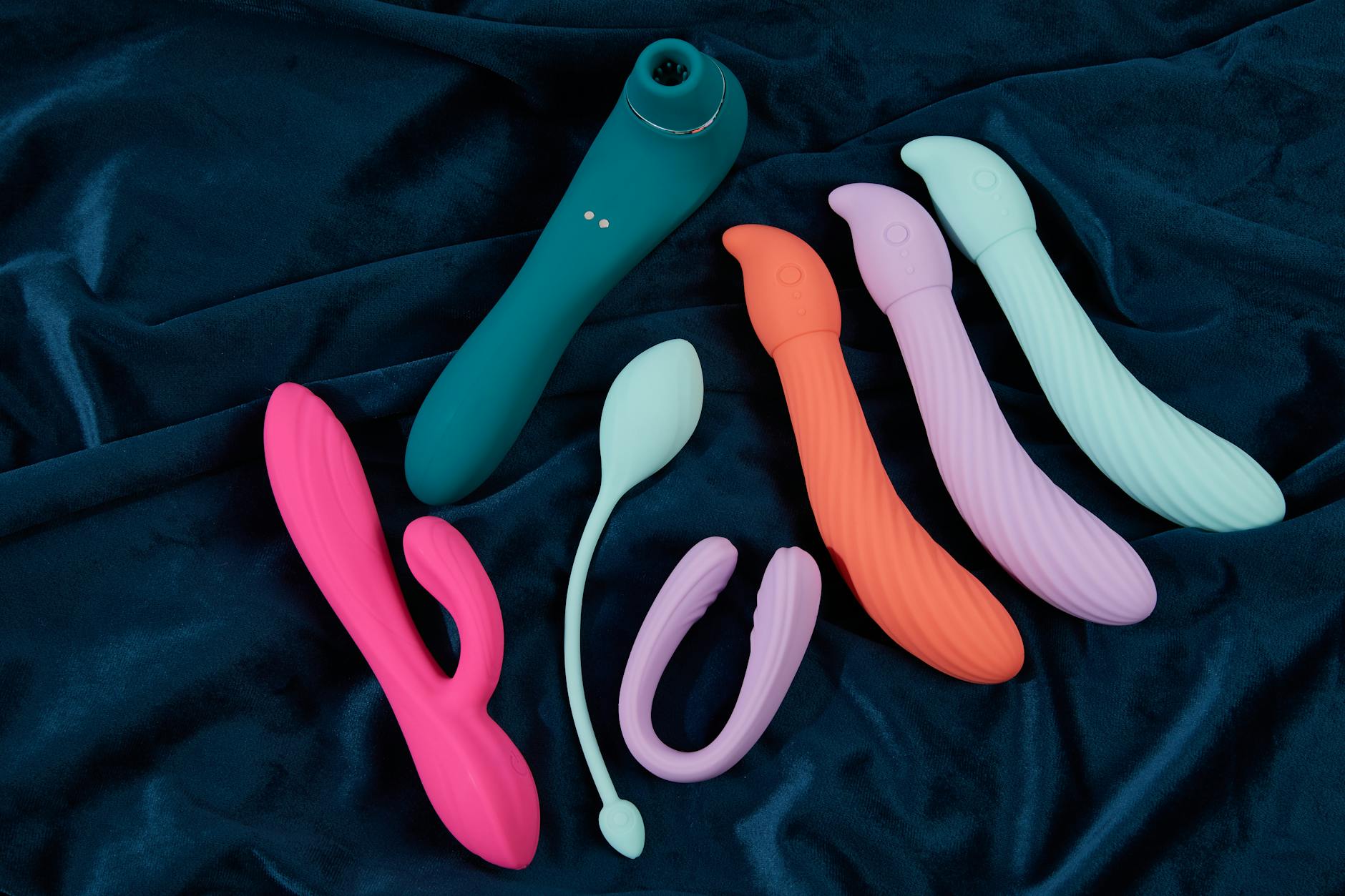
Honestly? Most couples don't talk about bringing toys into the bedroom because they're afraid it signals something is broken. One person thinks it means they're not enough. The other worries they'll seem too demanding. Both clam up, and the lemon vibrator stays in the drawer.
Here's what I've seen in two decades of couples counseling. The opposite is usually true. Introducing a lemon clitoral vibrator often happens because someone is paying attention. They noticed their partner's pleasure, wanted more of it, and did something about it.
Lemon vibrators use suction rather than traditional vibration, which means they work differently than other adult toys. This matters for partnered sex because the sensation is more localized, it doesn't numb over time the way some vibrators do, and it allows for a different kind of simultaneous stimulation than you'd get with a wand or bullet vibrator.
When you're using a lemon vibrator with a partner, the physical mechanics shift who's responsible for what. You're not waiting for penetration to happen around the toy. You're not positioning awkwardly to make it fit. You're both active, both present, and the focus lands on the person receiving pleasure rather than on logistics.
For a lot of couples, that's the first time penetration doesn't feel like the main event. Which sometimes makes it feel less pressured.
I'm not going to tell you to "have a talk." Talks about sex are boring and often fail. Instead, start somewhere smaller.
If you're the person who wants to introduce a lemon vibrator, try this: "I read something about how people get more pleasure with a lem suction vibrator. I'm curious if you'd want to try it sometime." That's it. No apology. No "I'm worried you're not satisfying me." No performance language. Just curiosity.
If your partner brings it up with you, the instinct is often to feel defensive. Push past that. Ask one question: "What made you think of it?" Listen to the answer. Most of the time it's "I want you to feel amazing" or "I want to try something new together." Those are good answers.
The person who's hesitant might say, "Will you still want me?" or "Does this mean I'm not enough?" Be specific in your response. "I want this because I want to see you come harder. That's all." Specificity kills the anxiety story.
Lemon vibrators work best when you have some freedom to angle and adjust. Here's what works for most couples.
If you're in missionary, your partner can hold the lemon vibrator and angle it toward the clitoris while they're inside you. It doesn't get in the way the same way a wand vibrator would. The suction toy is smaller, more controlled.
If you're in a side-by-side position, your partner can use the vibrator while you're facing each other. This is my go-to suggestion because you're not separated by the motion of penetration. You can see each other. You can check in without it feeling like a question that kills the mood.
If you prefer being on top, you have more control over the angle and depth. Your partner holds the lemon vibrator and you guide the pressure. Some people find this works best because the person on top can literally feel exactly what pressure works.
The thing nobody mentions: your partner's hand gets tired. Take turns, switch positions, or have them hold it while you do most of the movement. This isn't a flaw. It's just logistics.
It will. You're introducing a new object into something intimate, and your nervous system might register that as awkward even if your brain knows it's fine.
Start clothed. Hold the lemon vibrator. Get used to the weight and the sensation before you use it during sex. Some couples use it during foreplay for three or four dates before they bring it into intercourse. That's not hesitation. That's smart.
If you're the one receiving, communicate what settings feel good. The lemon clitoral vibrator typically has multiple suction intensities. Start low. You can always turn it up. You don't need to toughen up and handle high intensity if medium feels better. Pleasure isn't a test of pain tolerance.
If your partner is holding it, they need feedback that isn't "good" or "keep going." Try: "Slightly to the left." "A little bit softer." "Right there." This isn't clinical. It's you guiding someone toward what makes you feel amazing.
This matters more than you think. Five to ten minutes after sex, while you're both still close, say something. "That felt really good." "I liked trying that." "I want to do that again." Simple, direct, no analysis.
If it didn't work, that's fine too. "That wasn't what I thought it'd be, but I liked that we tried." No failure language. Just information.
Over time, you'll figure out when the lemon vibrator comes out. Some couples use it every time. Some use it once every few weeks. Some use it for specific types of sex. There's no right answer. The point is you're both choosing it, both present for it, and both getting something out of it.
Here's what I notice in my practice: couples who introduce toys together often report feeling more connected overall. Not because the vibrator itself is magic. Because someone said, "I want your pleasure," and the other person said, "Yes, let's try that."
That's a conversation about desire, about paying attention, about being willing to be a little awkward together. Those skills transfer to other parts of the relationship.
Your partner notices you're also willing to be vulnerable. To try something you're not sure about. To speak up about what you want. The lemon vibrator becomes a symbol of that, not the source of it.
If using a lemon clitoral vibrator with your partner triggers feelings you didn't expect, that's worth exploring. Sometimes it surfaces something about how you feel about your body, your desire, or your relationship that had nothing to do with the toy.
That's not a sign to stop. That's information. Couples who can stay curious about those moments instead of shutting down tend to end up closer.
If you're using lemon vibrators and orgasm becomes harder to reach, or if pain appears, check in with a specialist. Same if one of you is feeling pressure or resentment. A conversation with a couples therapist beats trying to solve it alone.
The best sex isn't always the most intense or the longest. It's the sex where you both showed up.
Yes. Most lem suction vibrators are designed for external clitoral stimulation, but you can use them externally while your partner is inside you. The suction design means there's less bulk than a traditional vibrator, so it won't get in the way the same way. Just make sure your toy is waterproof and compatible with your lube type before trying it.
Jealousy usually means, "I'm worried this means something about me or our relationship." Address that directly. "This isn't about you. It's about me wanting to feel different sensations. It's an addition, not a replacement." If the jealousy persists, that might point to something deeper about how you're both feeling about desire or intimacy in your relationship. That's worth talking through, maybe with a therapist.
Not objectively, but they work differently. Traditional vibrators can numb tissue over time and are bulkier. Lemon clitoral vibrators use suction, so they don't have the same numbing effect, and they take up less space. That makes them easier to use during penetration. But the "best" vibrator is the one that works for both of you.
Ask. "Would you ever want to try using a vibrator together?" If they say no, that's fine. If they say yes but seem hesitant, ask what's holding them back. Often it's not a no, it's a "not yet" or "I want to understand it better first." Don't push. Curiosity and patience go further than pressure.
Completely. Your bodies are different. One of you might come faster with suction stimulation than the other. That's not a mismatch. That's just information about how you both respond. Adjust your timing or focus. Some couples find that one partner comes first with the toy, then the other person has the lemon vibrator used on them afterward.
That usually means the communication around it wasn't quite there, or one of you is feeling rushed or pressured. Slow down. Start with the toy outside of intercourse. Use it during foreplay. Check in constantly. Intimacy is about presence and attention, not the absence of toys. If the toy is getting in the way of that, it's not the toy. It's how you're both approaching it.
Introducing a lemon vibrator to partnered sex isn't about fixing anything. It's about saying, "I want to explore your pleasure. I want to try new things together. I want you to feel amazing." That conversation, and the willingness to be a little awkward in service of connection, is what shifts things. The toy is just the vehicle.
If you're curious about trying a lemon sexual toy with your partner, start the conversation small. Stay curious. Check in often. And remember that the best sex is the kind where you both show up willing to try something new together.