
Let's name the real anxiety first
You want to bring a toy into your sex life with your partner. That's healthy, normal, and completely reasonable. But somewhere in your chest lives a small voice saying: "What if they think I'm not satisfied?" or "What if they take it the wrong way?" or "What if they think I'm weird?"
Here's the truth. That voice isn't protecting you. It's protecting an old story about sex that doesn't actually serve either of you. And the conversation you're dreading is actually the opposite of awkward. It's the most direct path to better pleasure for both of you.
Why the conversation feels hard (and why that's not your fault)
We grow up with a weird script about sex and desire. Men are supposed to want it always and know what to do. Women are supposed to want it sometimes and not ask for much. Partners are supposed to meet all of each other's needs without talking about it. Sex toys are supposed to be for people who are alone or unsatisfied. None of that is true, but all of it lives in our nervous systems.
When you want to introduce a lemon clitoral vibrator or any adult toy into partnered sex, you're actually swimming against decades of conditioning. The awkwardness you're feeling isn't a sign that the conversation is bad. It's a sign that you're about to do something brave.
That reframe matters. You're not asking for permission. You're proposing something better.
The setup: timing and context
Don't ambush your partner mid-sex or right before bed when they're tired. Don't lead with the toy itself. Do this conversation when you're both clothed, fed, and have actual focus. Ideally on a day when you've been intimate recently (so sex isn't abstract) but not immediately after.
A good opener: "I've been thinking about ways we could make sex even better for both of us. Can we talk about that for a few minutes?"
Notice what you didn't do. You didn't apologize. You didn't make it about what's wrong. You didn't lead with the toy. You led with curiosity and improvement. That's the frame.
The exact conversation (broken into moves)
Move 1: Normalize pleasure toys as normal tools.
"I've been reading about clitoral vibrators, and I think they could be really good for us. Not instead of you. With you. They work differently than hands or anything else, and honestly, I think we'd both enjoy it."
You're stating a fact, not asking permission. Lemon vibrators, suction toys, clitoral massagers, lem vibrators—these are standard tools for pleasure. Treating them that way disarms anxiety immediately.
Move 2: Make it about both of you, not about what's missing.
"I love what we do now. I'm also curious about trying something that might help me come faster, so we have more time for other stuff." Or: "I read that most women come more easily with clitoral stimulation during partnered sex. That sounds worth exploring together."
This is key. You're not saying "I'm not satisfied." You're saying "Here's what might be fun." It's additive, not critical.
Move 3: Anticipate the worry and name it directly.
Your partner might think: "Is this a sign you're not happy with me?" or "Does this mean you don't want me?" Pre-empt it.
"I know sometimes people worry that wanting a toy means something's wrong. For me it's the opposite. I want to explore pleasure more, and I want you there with me. That feels connected, not separate."
You're answering the unasked question. You're telling them what this means to you.
Move 4: Invite their curiosity.
"What do you think? Does that feel interesting to you?" Then actually pause. Let them respond. They might say yes immediately. They might need time to sit with it. Either is fine.
If they seem hesitant, don't push. Say something like: "I get it. We don't have to decide tonight. I just wanted to float the idea." Then give it space. Often, people warm to an idea faster when they're not feeling cornered.
What to do if they resist
Resistance usually comes from one of three places:
"I don't know if I can do that." Translation: They feel inadequate. Reassure them. "It's not about whether you can. It's about adding something new together. You're still driving this."
"That feels weird." Translation: They're not used to the idea. Normalize it. "I know it feels weird because we haven't talked about it before. Most couples who try toys actually end up liking them. It's not weird once you actually experience it."
"I don't need a toy." Translation: They hear it as criticism. Clarify. "I'm not saying you're not enough. I'm saying I want to explore something new with you. It's about us, not about what you're doing wrong."
If they genuinely don't want to after a real conversation, that's worth respecting. But most resistance softens once the idea moves from abstract to concrete. Offering to show them what you're thinking (a link, a product page for a lemon clitoral vibrator) sometimes makes it real instead of theoretical.
The first time actually using it together
Don't make it a production. Don't overthink the logistics. The first time, you might just incorporate it into what you already do. They're touching you, and you add the lemon vibrator or whatever toy you've chosen. You could also use it on yourself while they're inside you. Or let them try it on you first and see what happens.
The point: treat it like a new position. Awkward the first time, totally normal by the third.
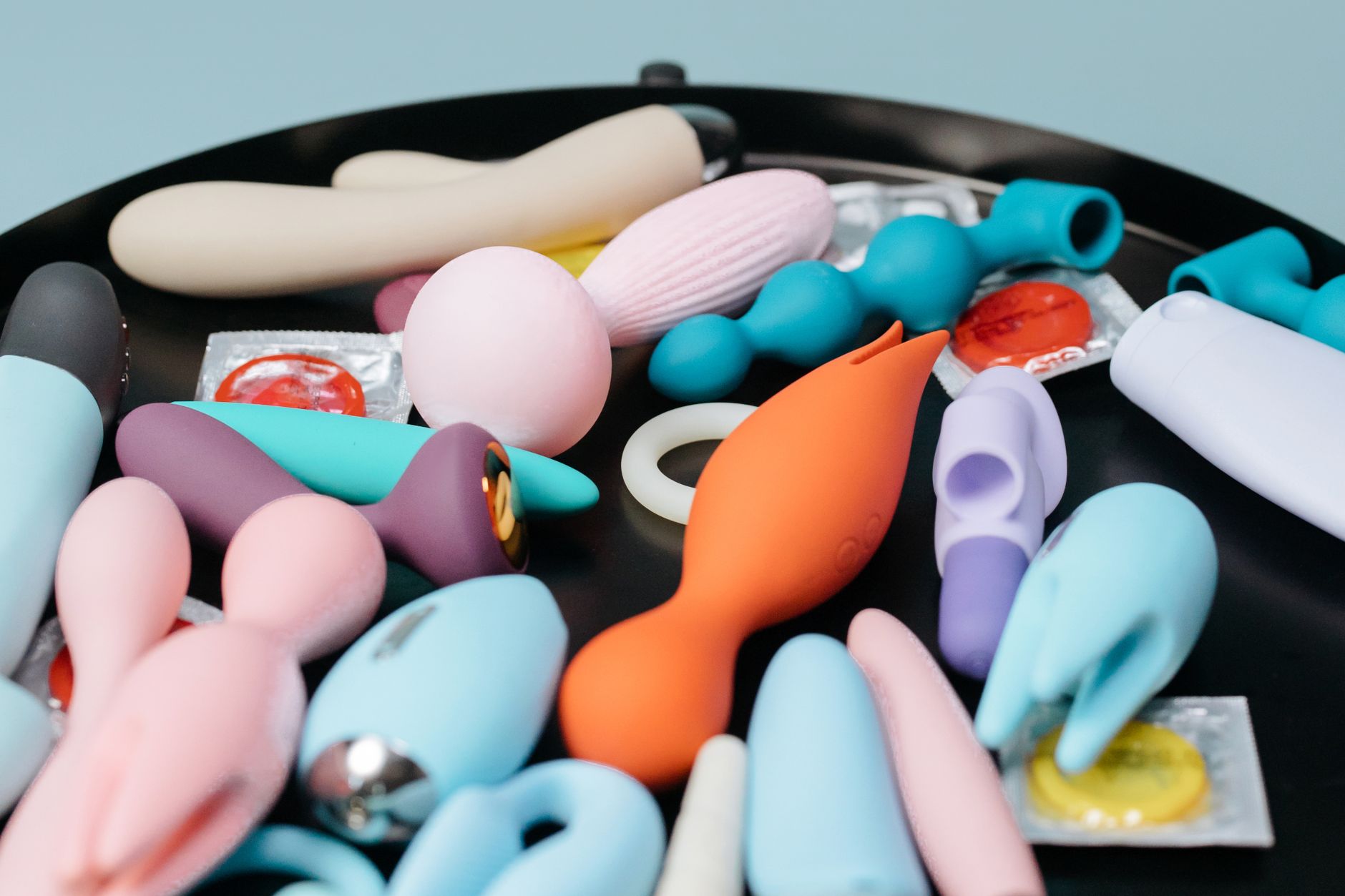
Photo by cottonbro studio on Pexels
Why this matters beyond the orgasm
Look. The technical reason to use a clitoral vibrator is that most women and people with vulvas come more easily with clitoral stimulation, especially during partnered sex. That's real. But the deeper reason to have this conversation is communication itself.
When you can say "I want this" without shame. When your partner can hear "I want this" without feeling threatened. When you can explore pleasure together instead of pretending spontaneous perfect sex happens without talking about it. That's when intimacy actually deepens.
You're not just introducing a toy. You're telling your partner: "My pleasure matters. Our pleasure matters. And we can talk about it."
That changes everything. Not just sex. The whole relationship.
If you're in a long-term relationship and sex has flatlined
Sometimes couples come to this conversation after months or years of disconnection. Sex feels obligatory. The spark is missing. A new toy isn't a fix for that (if you're dealing with resentment or disconnection, you might want to look at how to use lemon vibrators when sex feels obligatory not enjoyable first). But a toy can be a bridge back to curiosity.
When you introduce pleasure and novelty intentionally, it signals: "I still want this with you. I still want to explore." That's powerful.
Communication first, toy second
The hardest part of this whole thing isn't the toy. It's the conversation. But here's what happens once you have it: the next conversation gets easier. Then the one after that. Pretty soon you're talking about what feels good and what doesn't with the same ease you talk about dinner plans.
That's the real win. And it starts with one slightly awkward conversation that's actually way less awkward than you think.
You've already done the hard part. You decided your pleasure matters. Now you're just telling your partner about it.
People also ask
What if my partner thinks I want to use a toy instead of having sex with them?
That's a common worry, and it comes up a lot. Here's the direct answer: a vibrator doesn't replace partner sex. It enhances it. The best use is during partnered sex, not as an alternative to it. Make that clear in the conversation. "I want to use this with you, not instead of you." If they're still worried, sometimes showing them how you'd use it together (a video, a product demo) helps make it concrete instead of threatening.
How do I bring this up if we've never talked about sex directly before?
Start smaller. Don't lead with the toy. Start with: "I'd like us to talk more about what we both like in bed." Give that conversation a few days to settle. Then, once you've established that talking about sex is okay, the toy feels like a natural next step. It's easier to introduce novelty once you've already opened the door to direct communication.
What if my partner says yes but then seems uncomfortable when the toy actually arrives?
That's normal. Saying yes to an idea is different from experiencing the reality. Give them space. Don't use it the first week. Let it sit in your bedroom. Sometimes people warm up to something once they've had a few days to adjust to the idea. If they're still genuinely uncomfortable, respect that. But most of the time, a little time and normalization shifts the feeling.
Is it weird to use a lemon vibrator if I'm the one bringing it up?
Not even slightly. You're not supposed to wait for your partner to initiate pleasure exploration. That's an old script. You get to say what you want. You get to bring ideas to the table. That's healthy and hot.
What if they want to use it on me but I wanted to use it on myself during sex?
You can do both. The beauty of communication is you can try different things and see what works best. Sometimes they use it on you. Sometimes you use it on yourself while they're inside you. Sometimes you take turns. There's no one right way. The conversation gives you room to figure out what actually feels good for both of you.
How long should I wait after bringing it up before actually using it?
There's no magic number. Some couples try it that same week. Some wait a few weeks for the idea to settle. I'd say if they said yes and seem genuinely into it, a week is reasonable. If they said yes but seem hesitant, give it a few weeks. Let their nervous system catch up to their words. And if you're the one who needs time, that's fine too. This isn't a race.
The bottom line
The conversation you're dreading is actually an investment in both of you. It's you saying your pleasure matters. It's you believing your partner can hear that without falling apart. It's you building a relationship where desire can be talked about directly.
That takes courage. And it's worth it.
If you're ready to explore but want more guidance on how to actually use toys together, how to use lemon vibrators for deeper orgasms with a partner walks through the logistics. Or if you're curious about which toy might work best for your situation, we have a buying guide for choosing your first clitoral vibrator.
You've got this. The conversation is the hard part. Everything after that is just play.